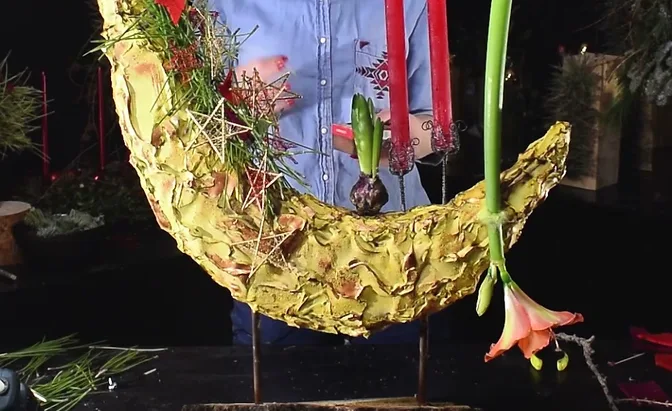
A fir wreath makes a circle from short evergreen pieces. A pinecone wreath gives the same shape a very different surface. A twig star leaves its structure open, while a moss tree turns a simple cone into a place for dried citrus and fine branches. Winter floristry begins with these choices: what the work should do in a room, which shape will suit it, and how the materials will hold that shape.
The seven projects below offer different answers. There are two wreaths, two small trees, a twig star, a potted orchid display and a round holiday bouquet. Each photograph shows a real finished piece. Look first at the whole outline, then at the material and the construction beneath it. Use the shape and construction to narrow your choice before gathering materials.
Begin with the place, then choose the shape
For a wall or door, consider the space around the decoration as well as the decoration itself. A full wreath reads as one continuous ring. A twig star draws a more open pattern, with branches and gaps still visible. Long pine needles or projecting twig tips extend the outline, so allow for them when judging the size. Choose a hanging fitting suited to the finished weight and the wall or door surface.
A shelf, side table or console offers a different view. A small tree leads the eye upward, while its pot sets the width and visual weight at the bottom. Glass lets you see into a composition, so moss, branches and the placement of the plant become part of the design. Check the full height, including a fine tree point or a branch that reaches above the flowers. On a dining table, also consider whether people will be looking across the arrangement.
If you are choosing a gift, think about what happens after it is given. A bouquet belongs in a suitable vase with water. A potted orchid remains a living plant, even when its nursery pot is hidden by winter decoration. A wreath or small tree is chosen chiefly for its display position and constructed shape. Match the project to its display position and the way its recipient will care for it.
7 Christmas Floral Projects
1. A full fir wreath with warm gold details
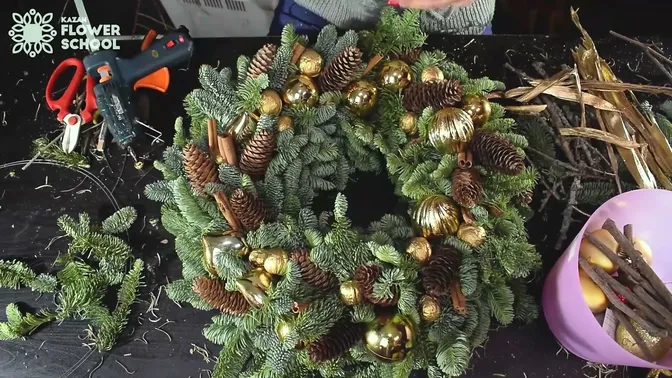
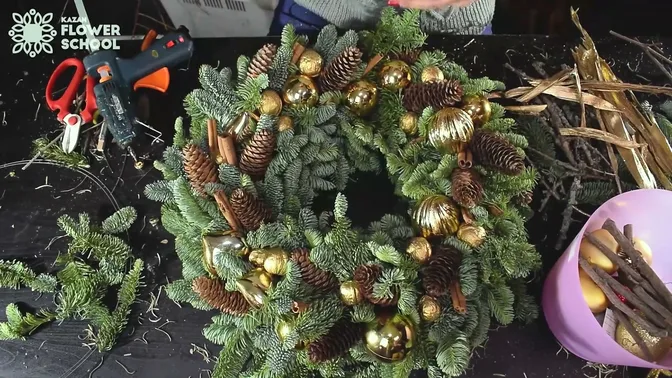
Choose this wreath when you want a dense, familiar Christmas shape with a soft needle texture. Short fir pieces cover a firm natural hay ring. Their direction repeats around the circle, giving the surface a continuous movement before the decorations are added. Cones follow that movement, while nuts, cinnamon and a small range of gold details sit at different depths.
Most of the shaping happens while the greenery is bound. Each new layer covers the previous wire, and the final pieces slide beneath the first layers to hide the join. Keeping the centre clear is part of that work: an overfilled ring can lose its shape even when it has plenty of greenery. Covering the back and checking the hanging point complete the construction.
The fresh evergreen wreath guide follows the base, overlapping layers, concealed join and finish in real process photographs.
2. A pinecone wreath with fine twig lines
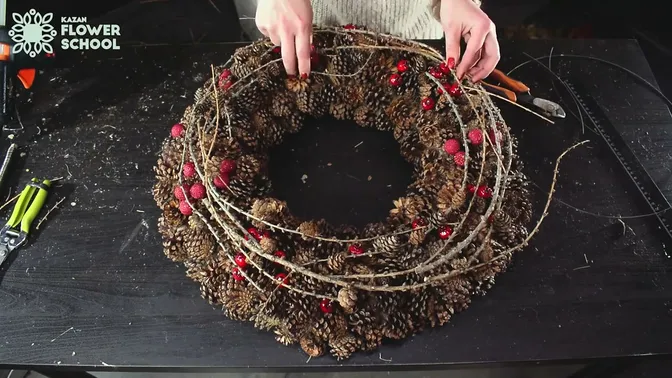
The circular outline is familiar, but the repeated scales of the cones give this wreath a more sculptural character. Small red accents break up the brown surface without replacing its natural texture. Fine larch twigs trace the ring and add a second, lighter kind of line.
Each cone receives its own wire fixing, with two legs that enter the hay base. Placement matters: turning one cone slightly can help it sit close to its neighbours. Small pieces of wool conceal the remaining exposed hay beneath the cones. The main task is to make a coherent surface from individual rigid pieces, then add the branches without obscuring the opening.
Use the pinecone wreath guide to examine the fixings, close spacing, gap filling and branch placement. If you are deciding between these two circular designs, the Christmas wreath comparison brings the material, base and finishing choices together.
3. A greenery tree shaped around a potted support

A small tree can give a side table or console a clear vertical focus. Here, dense fir and longer pine needles build the green body. Red decorations lead the palette; smaller white details, light branches and a narrow wrapped point keep the upper area from looking heavy.
The outline grows from branches bound around a metal rod secured in the pot. Longer pieces establish the lower width, while progressively smaller pieces form the tip. Turn the pot as you work so that the tree has depth as well as a convincing front view. Trim projecting stems and fill shallow areas before ornaments make those decisions harder to see.
The greenery Christmas tree guide explains the supported base, binding, taper and red-and-white finish. Choose it if you want to build the volume branch by branch.
4. A moss tree with dried citrus and a fine wrapped point
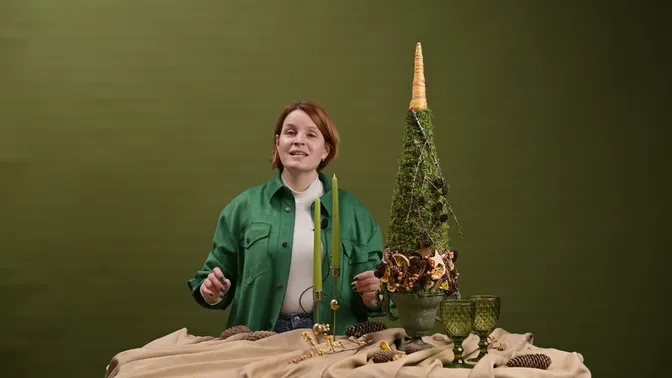
This tree offers a calmer surface than loose fir and pine. Dried orange and lime slices, cinnamon, cones and small decorative details gather near the bottom. Above them, moss follows the cone toward a slender yarn-wrapped point. The change from a quiet green area to a textured lower band gives each material room to be noticed.
A rigid cone establishes the shape before the moss goes on. Tape helps hold prepared moss sections while fine wire binds them to the body. The pot connection is a separate stage, followed by the low band of decoration. The task is to fit and finish a covering, rather than create the whole silhouette from branches.
Follow the moss tree with dried oranges for the point, covering and pot fitting. The tabletop Christmas tree comparison also explains how greenery, moss and open frames change the making process.
5. An open twig star with pine and red ornaments
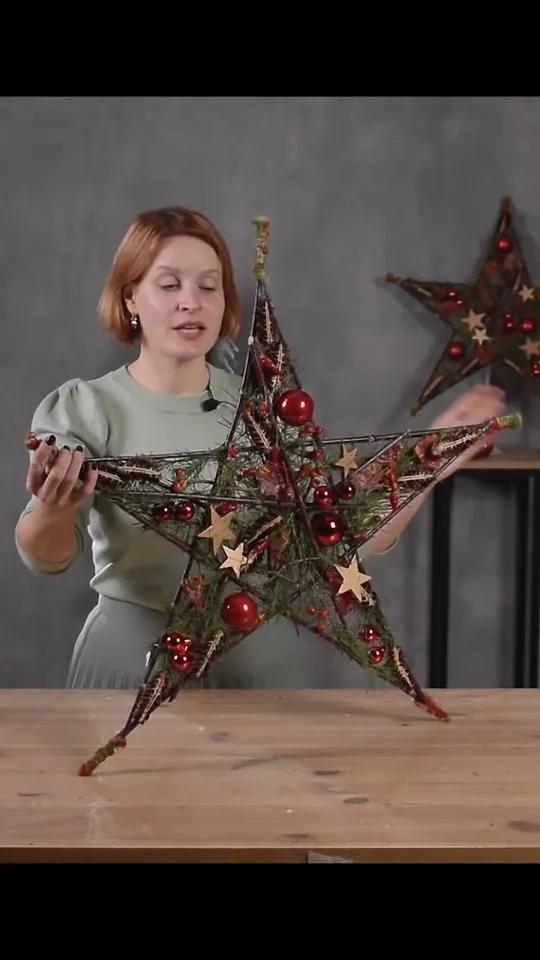
For a graphic wall decoration, an open star gives natural branches a strong outline. Five main twigs establish the shape, with shorter internal supports providing places for greenery and ornaments. Pine fills parts of the frame, red baubles form small groups, and wrapped tips finish the projecting ends.
Make the bare star convincing first. Its outer points and inner crossings are bound before the smaller branches are added. The decoration then works within that structure: a bauble can sit among the branches, while greenery supports a point instead of spreading beyond it. Leaving some spaces open helps the five-pointed form stay clear at a distance.
The Christmas twig star guide shows the frame, joints, greenery, garlands and finishing details. It is a different construction from a wreath, even when the two share pinecones or red accents.
6. A winter orchid display in glass
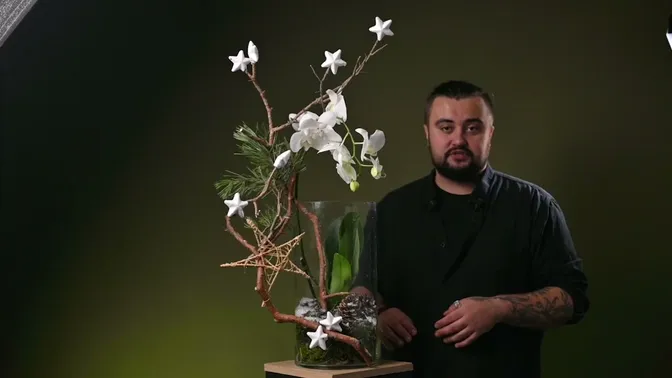
A potted orchid changes the character of a winter display. The flowers bring a lighter shape above the glass, while moss conceals the inner pot and driftwood connects the lower and upper areas. One branch sits inside the vessel and another continues outside it. White stars and a separate open star made from wooden skewers repeat the winter motif without hiding the plant.
Choose the glass and branches around the actual orchid. A tall flower stem needs a different surrounding shape from a smaller plant. In this example, the stem is attached to the inner branch, and the outer wood makes a visible line beyond the vessel. Think of the container, plant and projecting branches as one silhouette when choosing a display position.
Keep the living plant accessible. A practical decorative arrangement allows the inner pot to be removed for watering and drained before it returns to the glass. Decorative moss does not replace plant care, and water should not collect around the roots. Check the growing medium and room conditions instead of adopting a fixed watering calendar.
7. A round holiday bouquet with fir and small ornaments
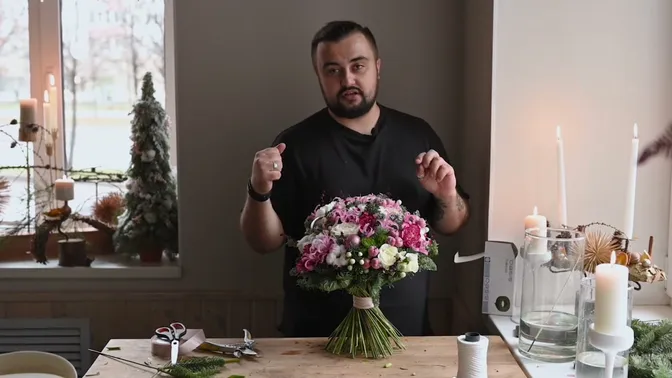
A bouquet is a useful choice when you want the gift to be the flowers themselves. In this example, pink and white blooms sit among fir, cotton, berries and small Christmas ornaments. The evergreen collar gives the outside edge a clear circle, while a few lighter flowers rise above the main surface.
The greenery is prepared before assembly. Small fir pieces are attached to wooden picks so they can be placed among the flower stems. The stems and prepared elements follow one spiral direction. As the bouquet grows, the outer rows sit lower than the centre to form a rounded dome. Turning the bouquet reveals whether one colour or material is becoming too concentrated on one side.
The finished bouquet is tied and shown standing on its trimmed stems. That is a presentation of its shape, rather than a substitute for placing cut flowers in a suitable vase with water. When adapting the palette, preserve the spiral, the rounded outline and the repeated distribution of materials; adding more ornaments alone will not create that form.
Choose materials for the part they will play
Dense fir can establish a surface. Longer pine needles soften an edge. Bare twigs draw a line through open space, while moss follows the outline of the core beneath it. Pinecones create repeated solid forms; dried citrus and cinnamon give a quieter green surface distinct patches of texture. Looking at these roles helps you choose materials before shopping for decoration.
The same greenery may need a different preparation for each project. Short fir pieces are bound continuously around a wreath ring. In a bouquet, prepared pieces need individual picks that can move among the stems. A larger garland grows from overlapping bundles, with each new binding connecting to the preceding handful. The visible green surface does not tell you which fixing belongs underneath it.
Use the Christmas greenery guide to compare fir, pine, cutting choices and the relationship between the material and its support. Try a small section on your own base before preparing every branch. It can reveal an awkward stem length, too much bulk or a gap in the surface while those decisions are still easy to change.
Carry one idea through the room
A coordinated display does not require identical pieces. Repeat a colour or material, then let its scale change with the setting. The small gold details in a fir wreath can echo a warm accent on a table. A pinecone wreath and a moss tree can share natural textures while keeping different outlines. A wall star and the smaller stars around the orchid can repeat a shape without repeating the same construction.
Choose one main piece for the space first. View it from the doorway and from the place where you normally sit. A large wall silhouette may be enough on its own; a console may have room for a vertical tree and a smaller floral gift. Decide whether the next piece adds a different height, surface or purpose before adding it simply because there are materials left over.
Christmas colour can also become quieter winter colour. Fir, cones, moss and bare branches still provide their own texture when a strong red accent is reduced. Let the condition of the actual work guide what stays on display.
Explore more of winter floristry
Wall decorations and small trees are only part of the season. Table flowers bring another question: how to arrange the container, height and open view around the people using the table. A low centrepiece, a long arrangement and an elevated vase each change the space differently. Start with the table and its use, then choose the flower shape and the way its stems will receive water.
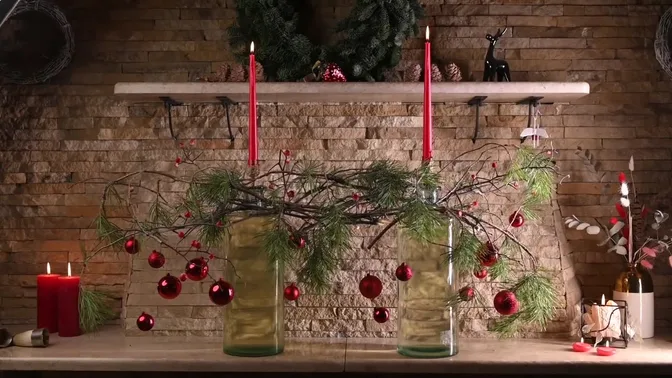
Garlands and mantel arrangements work across a longer distance. Their rhythm comes from repeated bundles, branching lines and changes in density. A large construction also needs its own support and attachment plan; a small decorative fixing cannot simply be enlarged by adding more greenery. Keep candles unlit near greenery and other decorative materials.
Gifts can move beyond a hand-tied bouquet or amaryllis in a cone-covered planter. Dried flower pieces, open wreaths and glass displays offer other combinations of container, empty space and surface. Choose them for their actual materials and intended setting, with their own construction and care requirements. They need not imitate the density of a fresh fir wreath to belong to the same winter palette.
If you are planning several pieces for gifts or a small seasonal collection, begin with a clear selection rather than every available decoration. Decide which shapes you can make consistently, prepare the repeated components, and inspect the finished work from its intended viewing angle.