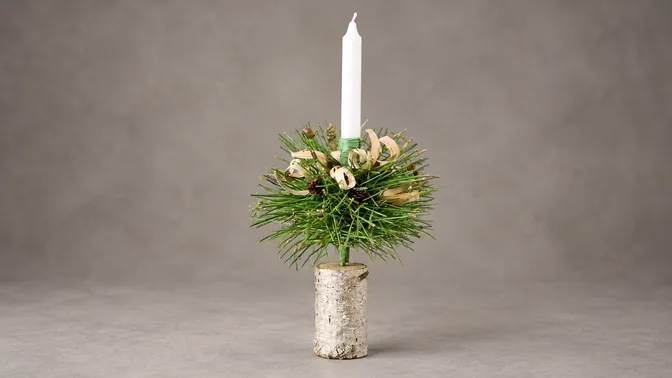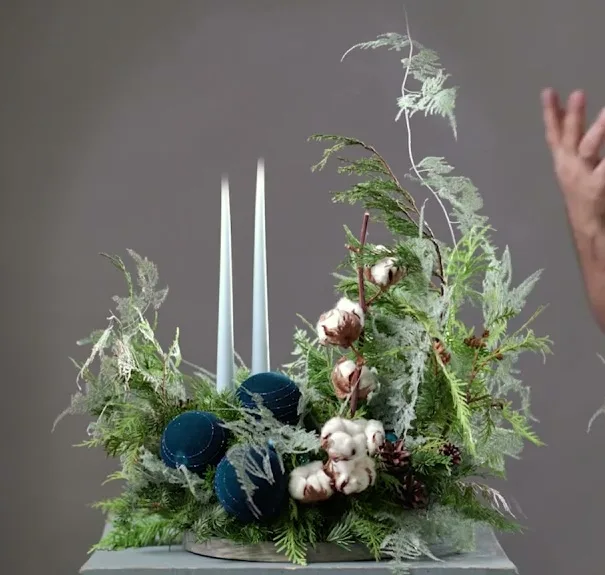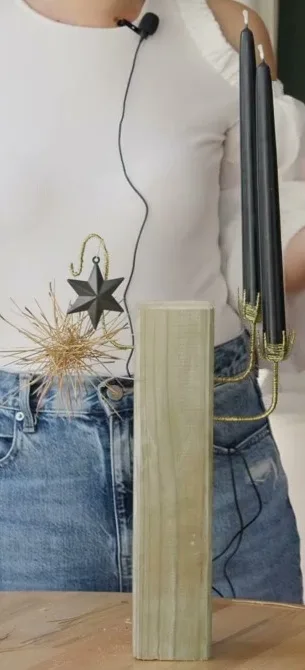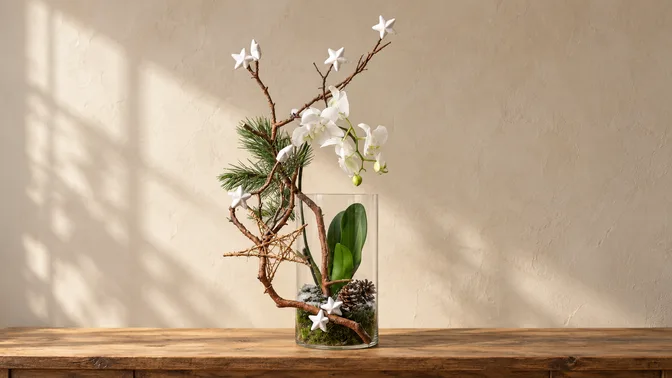
A low cushion of evergreen spreads across a table. A white orchid rises above glass, with open space between its branches. Each brings a different shape to a small room. To plan a small holiday flower arrangement, start with the place it will occupy, sketch its outer shape, then choose a container that supports that shape and the materials inside it.
The useful measurement is the whole arrangement: the vessel, the furthest branch and the tallest flower. A little pot can carry a surprisingly wide spread of greenery. A narrow cylinder can have a small base while its branches reach far beyond the rim.
An upright orchid display leaves open space around its branches.
Give the arrangement a place before giving it a size
Put the empty container where you hope to enjoy it. On a dining table, lay out the plates, glasses and serving dishes you actually use. On a console, leave room for the lamp, keys or whatever normally lives there. This gives you a real boundary to work within.
Now imagine the greenery extending past the container. Mark that outline on a sheet of paper beneath it, or use a few loose branches to try the spread without fastening anything. Check the space from the doorway and from the chair beside it. For a dining table, sit down and look toward the person opposite: the arrangement needs to fit that view as well as the tabletop.
A display against a wall has a clear front; one in the middle of a table is seen from several sides. Decide which you are making before choosing a branch that looks wonderful from one angle and disappears from another.
A small group also needs this rehearsal. Three little vessels occupy the space between them as well as their own bases. Try the complete group together before you buy enough material for every piece.
Read the silhouette before the decoration
The silhouette is the outer shape you would see if all the colors became one. It tells you whether the composition is spreading across the surface, rising above it or doing a little of both.
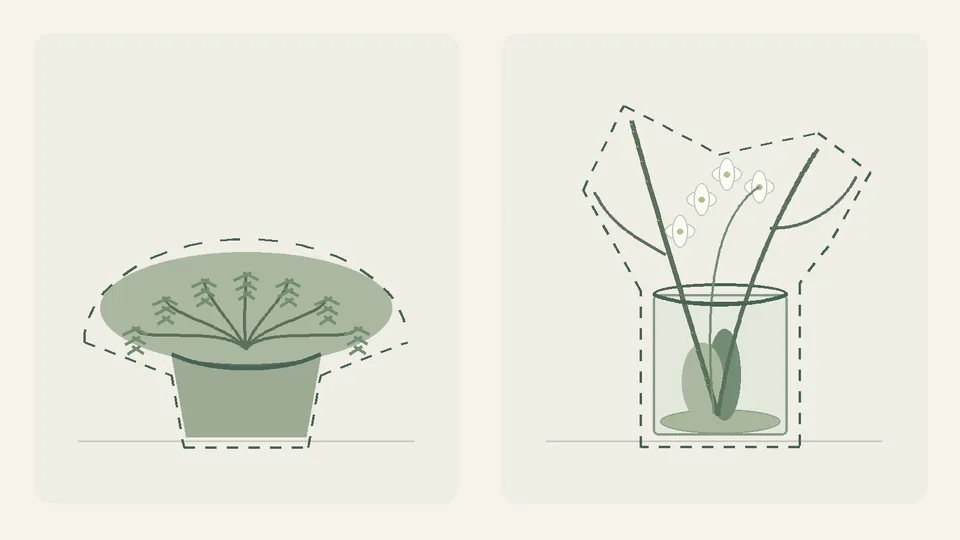
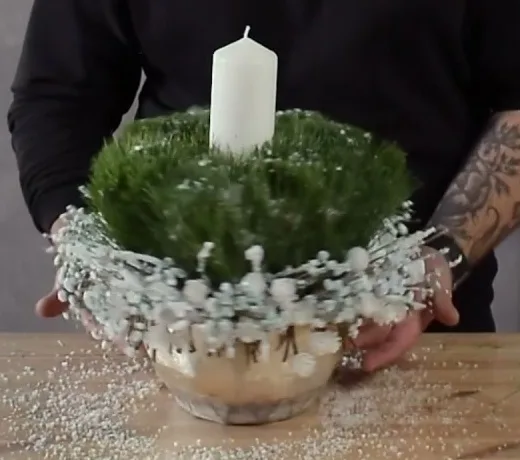
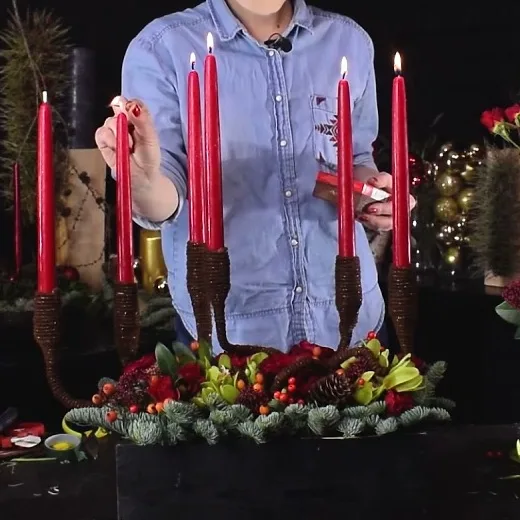
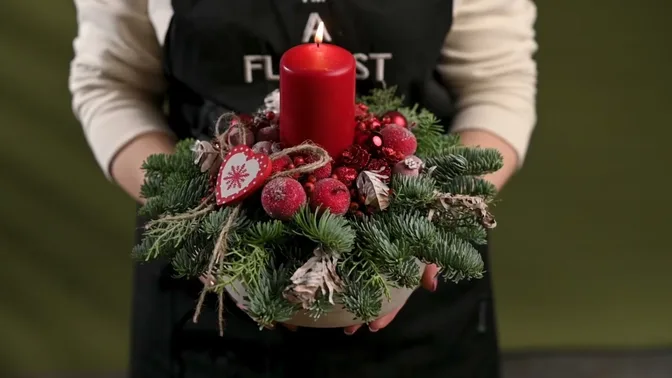
Imagine a round evergreen arrangement with one candle at the center. A low container sits beneath a green cushion, while the upright candle gives it a clear center. In a red winter design, the circular container, surrounding foliage and grouped decoration repeat that rounded shape. The greenery establishes the outside edge before the smaller details fill the middle.
For a compact, rounded display, decide how far the edge may reach, then check it as you add material. Leaving every branch a little longer will gradually turn a small design into a large one. Short stems in a radial arrangement help keep the intended outline within reach.
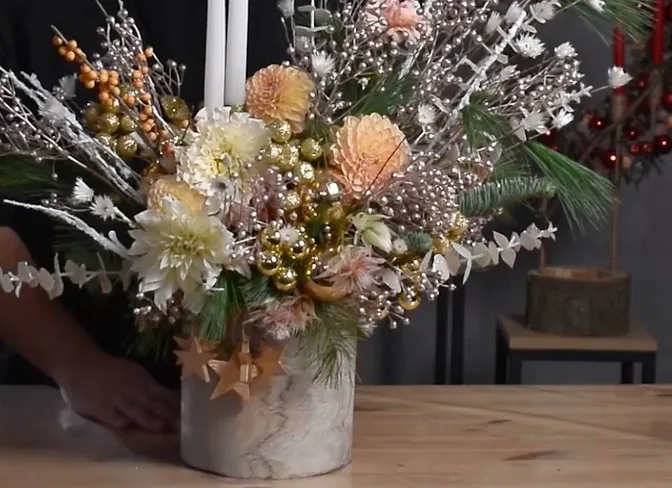
An orchid in glass creates another kind of presence. Its flowers and twisting branches draw the eye upward; the open spaces between them remain part of the design. The visible width includes the branch outside the vase. Choosing a smaller vessel alone will not make the same plant and branch fit a narrower space. The plant and the main lines need to change with it.
For a table where people eat and talk, try the low rounded outline first. For a console with room above it, try an upright open outline. Test both sketches in your own setting; the surrounding objects and your view will help you choose.
Let the container take part
A container is already a large shape in the finished arrangement. Its rim, color and surface remain present even when you add flowers.
A low opaque vessel can leave the foliage as the main visible mass. It also conceals the support inside. A transparent cylinder exposes the lower layers, so moss, the plant pot and the position of branches need consideration from the beginning. Glass does not make those layers disappear.
Look at the opening as well as the outside dimensions. Does the actual plant pot fit inside? Can the chosen support sit securely? Is there enough room to assemble the parts without forcing them together? A vessel can look generous from the side and still be too narrow at the rim for the project you have in mind.
The inner arrangement also changes the outer shape. In a radial design, stems point toward an imagined common center inside the support, like spokes. They spread outward into the rounded outline. A shallow bowl with foliage reaching over its rim and a tall cylinder containing a potted plant use their space differently; they are not interchangeable just because their widths are similar.
If the glass-and-branches idea appeals to you, the winter orchid display in glass looks more closely at that particular construction. Use it to explore the relationship between the plant, the vessel and the branches before adapting its scale.
Keep the details in proportion to the shape
Once the main outline works, place the largest decorative element beside it before attaching it. A single large ornament may become the first thing you notice, even in an arrangement with very little material. Decide whether that is the emphasis you want.
In a rounded evergreen design, a few grouped accents can make a distinct patch of color. Smaller pieces can connect those groups and soften the gaps. Spacing every ornament equally produces a different effect: a repeating pattern around the whole arrangement. Choose deliberately instead of adding another piece wherever there is an empty space.
Scale also comes from the plant material itself. Broad leaves already count as large shapes. An arrangement of leaves and small berries may need a modest flower or another intermediate detail, rather than a large flower added at the end. Let the shapes already present guide the next addition.
Check the lower edge while you work. From above, a design can look full while the support remains visible beneath the foliage. Turn the vessel and look from the height at which you will usually see it. Keep the top and lower rim developing together.
Make a small plan you can shop from
Before buying materials, draw a side view and a view from above. Artistic skill is unnecessary: a rectangle for the container, a line for the tallest point and a rough outline for the spread will do.
Write down:
- The space available for the complete design, including projecting branches.
- Whether it will be seen from one side or all around.
- The container's opening and the space needed for the plant or support inside.
- The material that makes the main shape, followed by the accents you want to add.
For example, “a low round arrangement for the center of the table” still needs an outer edge that fits between the dishes. “An orchid in a narrow glass vase” still needs room for its leaves, flowers and branches. A sketch with those boundaries gives you a size to shop for.
Take the sketch back to the chosen spot once more. If the outline already feels crowded, simplify it before adding decorations. If the outline fits and the main materials are clear, you have enough of a plan to choose the right vessel and begin.