Choose dried flowers by the job each material will do: soften the outline, draw a line, create a broad surface or give the eye a clear focal point. Two stems can share a color while contributing entirely different shapes. Start with a few distinct roles before adding more stems.
Lay the stems beside one another before choosing a container or frame. Compare the size of the heads, the density of the branches and the direction of the stems. Then consider the scale of the finished project. Fine details that remain clear in a small arrangement may need grouping to show up in a large hanging piece.
Think in roles, not a shopping list
The role | What to look for | A useful contrast |
|---|---|---|
Soft volume | Fuzzy heads and fine plumes | Smooth leaves or firm seed heads |
A focal point | A large bloom or substantial seed head | Smaller surrounding material |
A line | A branch, grain stem or long stalk | Open space around its outline |
A surface | A broad leaf or woven strip | Loose branching material |
Fine detail | Small pods and delicate branchlets | A clearly grouped area |
These are design roles rather than botanical categories. The same seed head may be the largest element in a boutonniere and a minor detail in a floor arrangement.
Soft and dense materials
A small bouquet in a ceramic pot
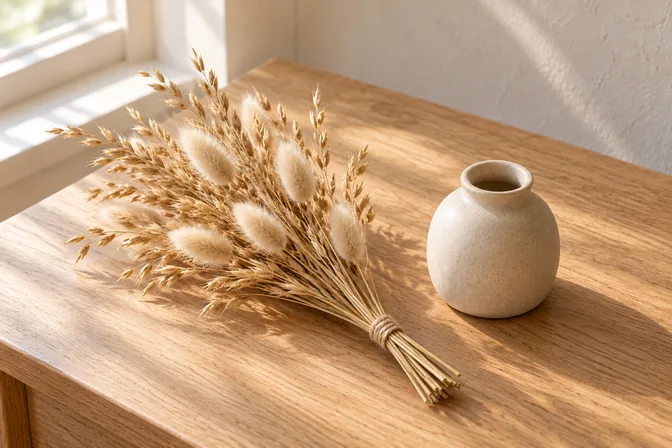
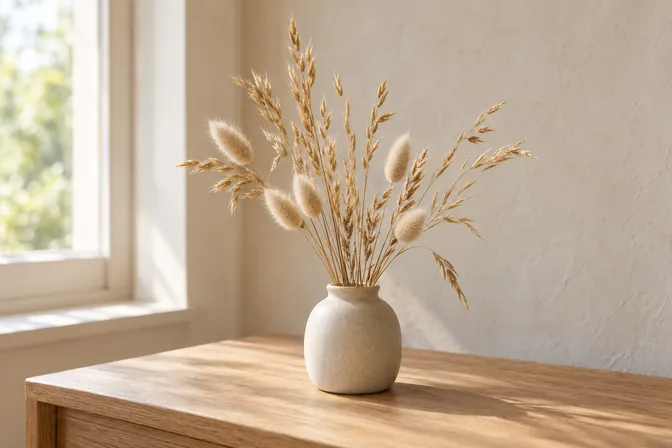
Grasses and bunny tails combine slender lines with soft oval heads. The narrow neck of the ceramic pot gathers the stems while the upper part remains loose. This is a useful starting point for a small selection: arrange the materials so each stays visible rather than disappearing into one undifferentiated mass.
A round arrangement with a large dried peony
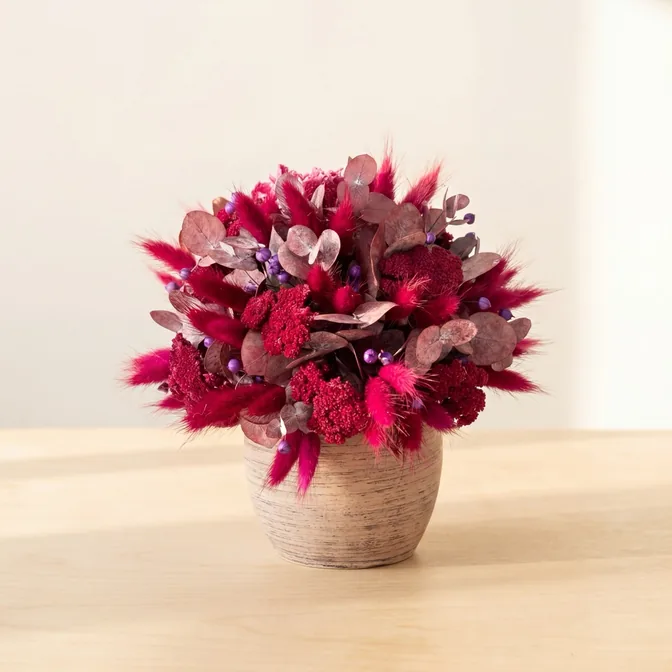
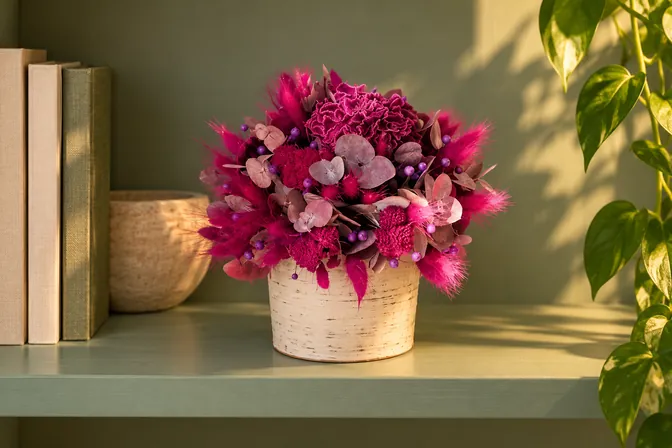
In this wine-colored arrangement, bunny tails sit beside denser yarrow heads, eucalyptus leaves and a dried peony placed off center. The peony reads as a large accent because smaller materials surround it. If every element were equally large, that distinction would disappear. Lower stems curve around the ceramic container, continuing the rounded outline.
Explore the step-by-step video for this project.
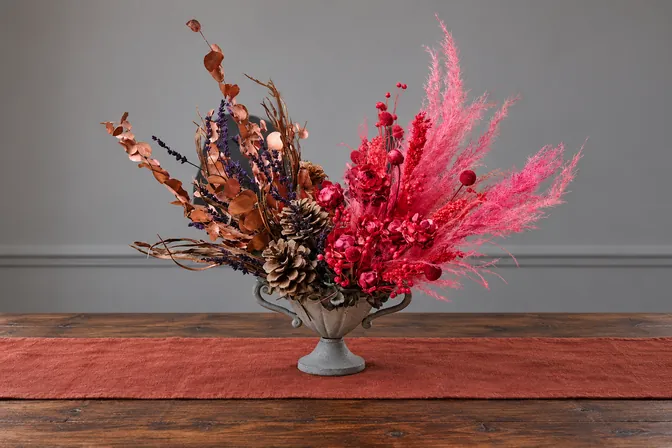
A spreading arrangement in a metal container
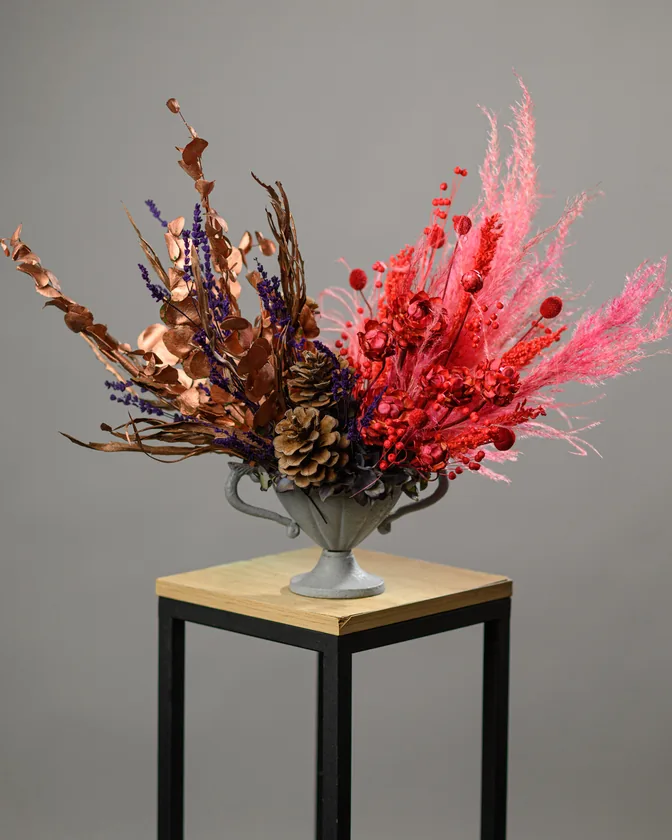
Hydrangea and colored plumes provide soft masses, while artichoke heads and substantial dried blooms bring larger, firmer shapes. Copper-colored eucalyptus extends to one side and red-pink grasses to the other. Notice how placement changes the combination: distinct textures form visible groups rather than being mixed evenly throughout the arrangement.
Give bold heads room to read
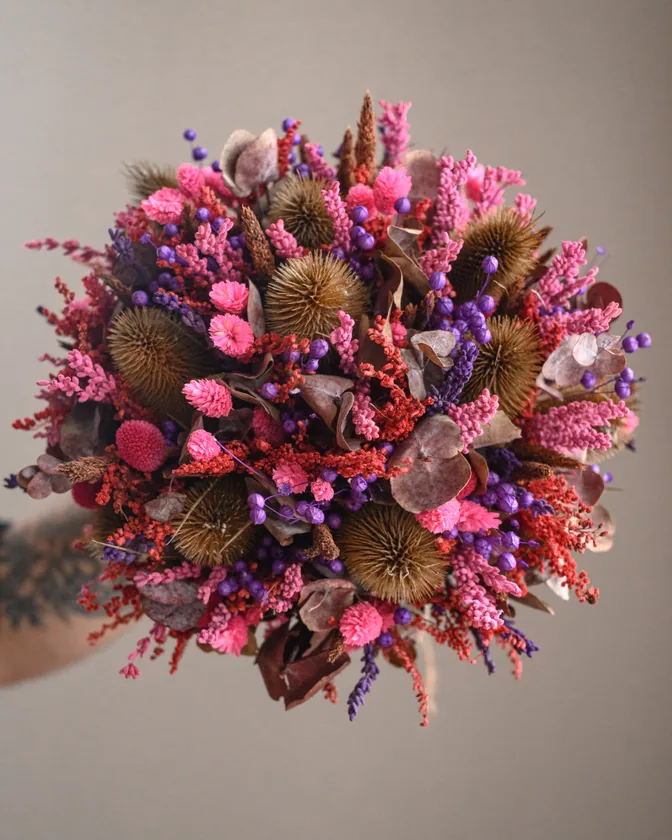
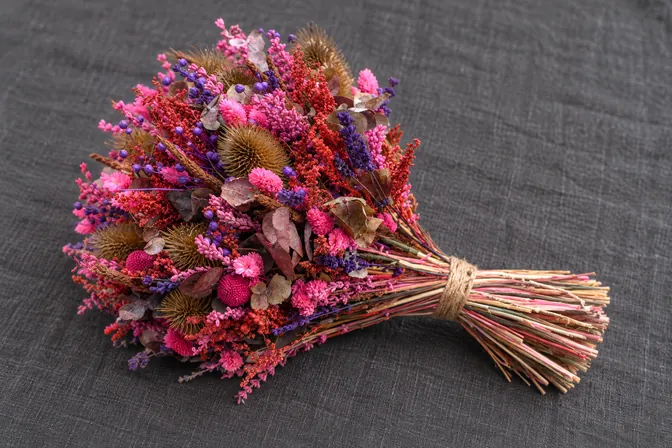
A European round bouquet
Large prickly dried heads create prickly accents among smaller dried flowers in this hand-tied dome. Spiral assembly places the stems in one direction around the binding point. Check whether the large heads have enough smaller material and color transitions between them. A dense block of one texture would create a different effect, even in the same rounded shape.
Explore the step-by-step video for this project.
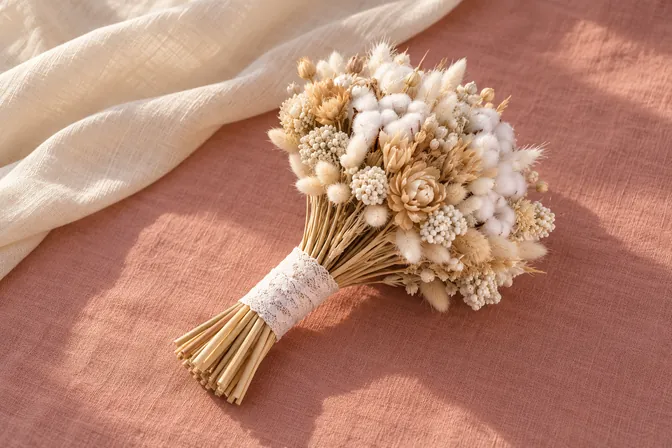
A bridal bouquet with several scales of material
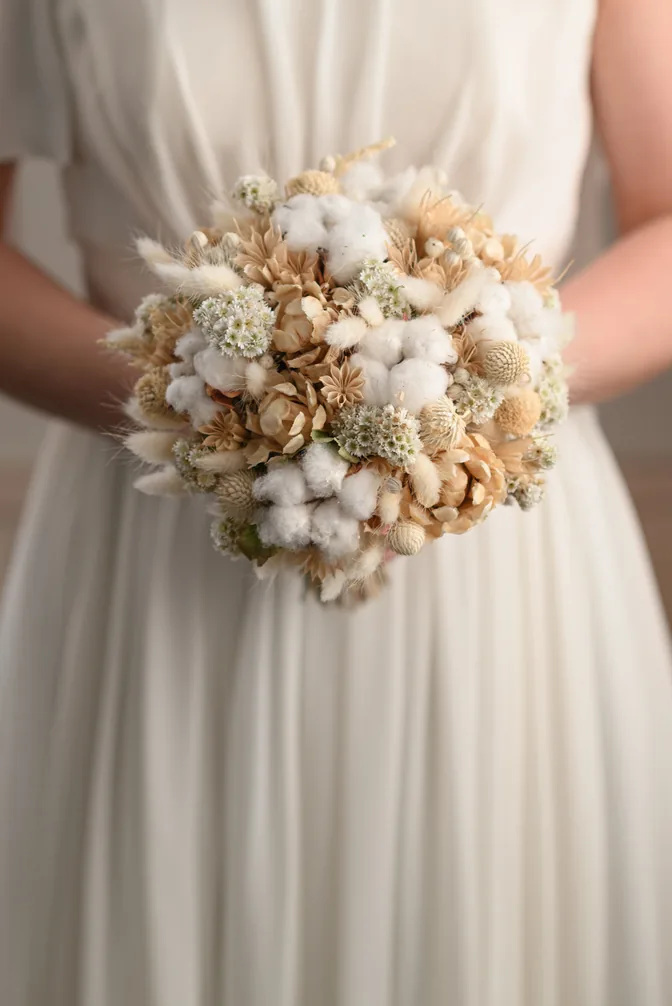
Artichoke heads and cotton provide large forms, with bunny tails, smaller pods and fine flax stems around them. Hydrangea acts as a filler, helping separate the smaller elements through the volume. Preparation matters as much as color: short branches need suitable supports to reach the binding point. Leave enough room for the different heads to remain distinct.
Explore the step-by-step video for this project.
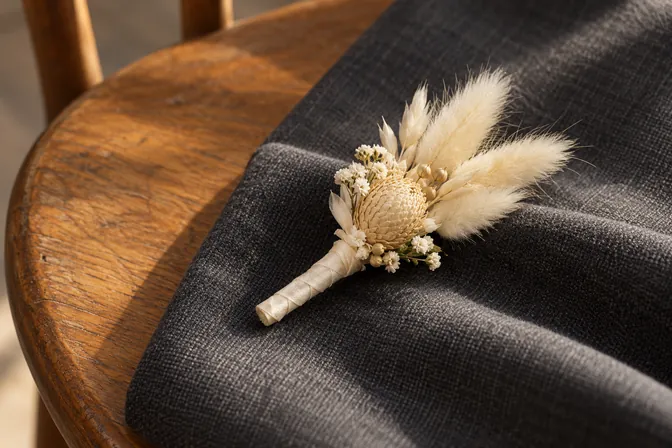
A boutonniere changes the scale
In the small boutonniere, an artichoke head becomes the principal large element. Flax adds a fine pattern and compact filling builds a triangular outline. Choose the head in relation to its neighbors and the whole accessory. Keep the reverse and fastening as tidy as the visible side.
Put loose texture beside a clear surface
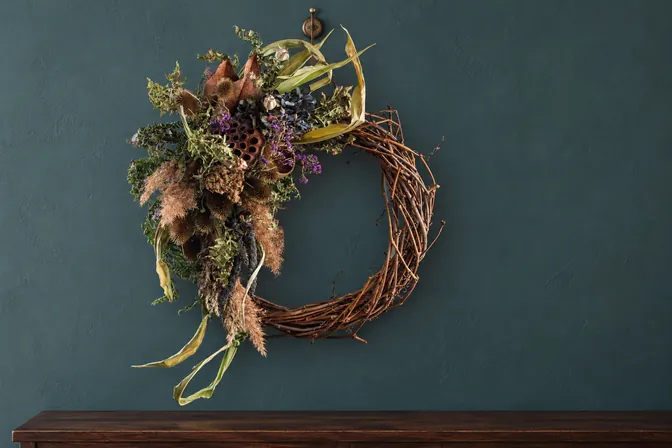
An open vine wreath
Part of the vine circle remains uncovered. A fuller group to one side combines loose fern and hydrangea with corn leaves and lotus. The calmer surfaces give the eye somewhere to pause among the fine branches. The opening in the wreath is also part of the design; it does not need to be filled with another bunch of stems.
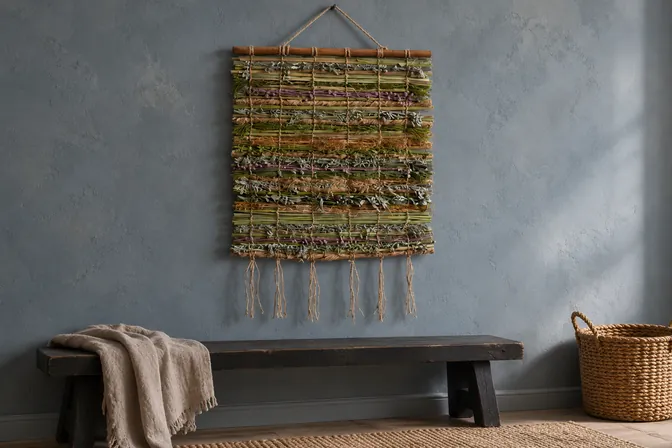
A woven botanical wall hanging
Cattail leaves create woven bands, while wormwood, flax, fine plumes and horsetail change the texture between them. Twine and a wooden support hold the plant surface, with twisted kraft paper and tassels adding another pattern. The materials act as neighboring areas rather than a mixed bouquet. Preparation matters: fresh cattail leaves can loosen the weave as they dry.
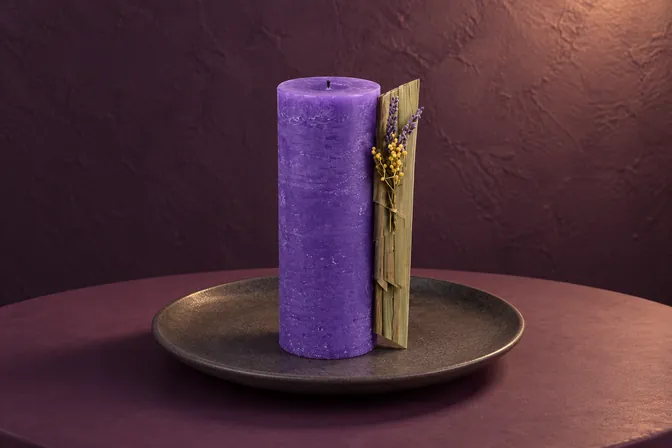
Dried leaves decorating a candle
Layers of dried cattail leaves cover a small wire platform beside the candle. The leaf surface becomes a background for lavender and other small dry details. A flat area comes first, followed by a smaller accent above it. Keep a candle with this combustible decoration unlit; the project is a decorative object rather than a safe way to burn a flame among dried plants.
Keep the lines and open spaces
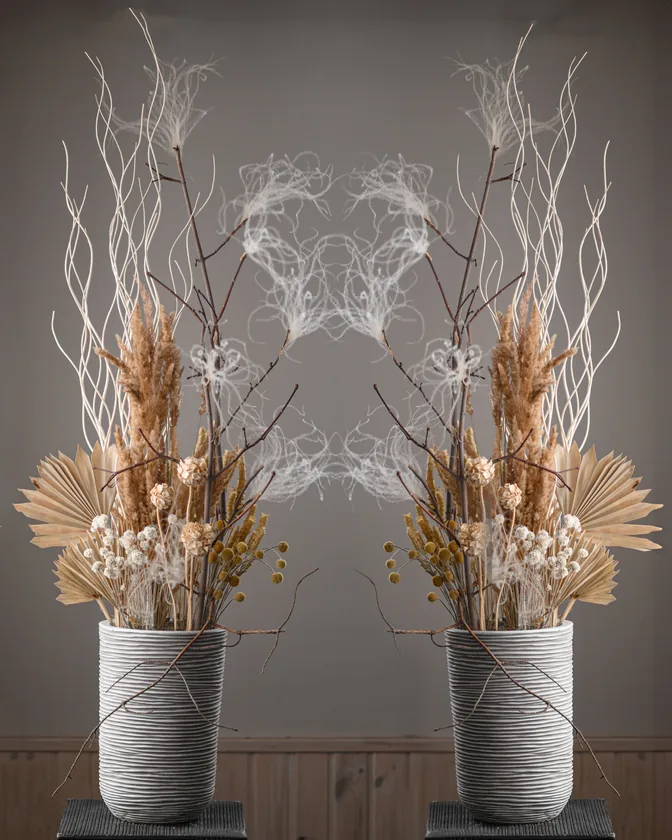
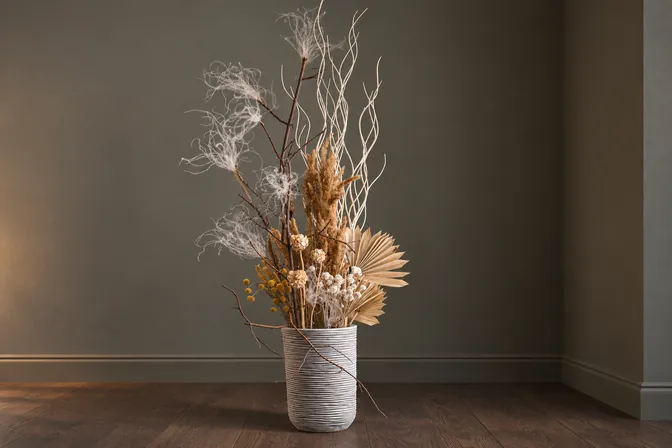
A floor arrangement
Branches create tall, winding lines, grasses continue the movement, and palm leaves and artichoke heads make larger shapes at other levels. Grouping lets you see both individual branches and denser areas. If all the materials ended at one height, their lines would disappear behind a single boundary. Look from the side before adding more filling.
Explore the step-by-step video for this project.
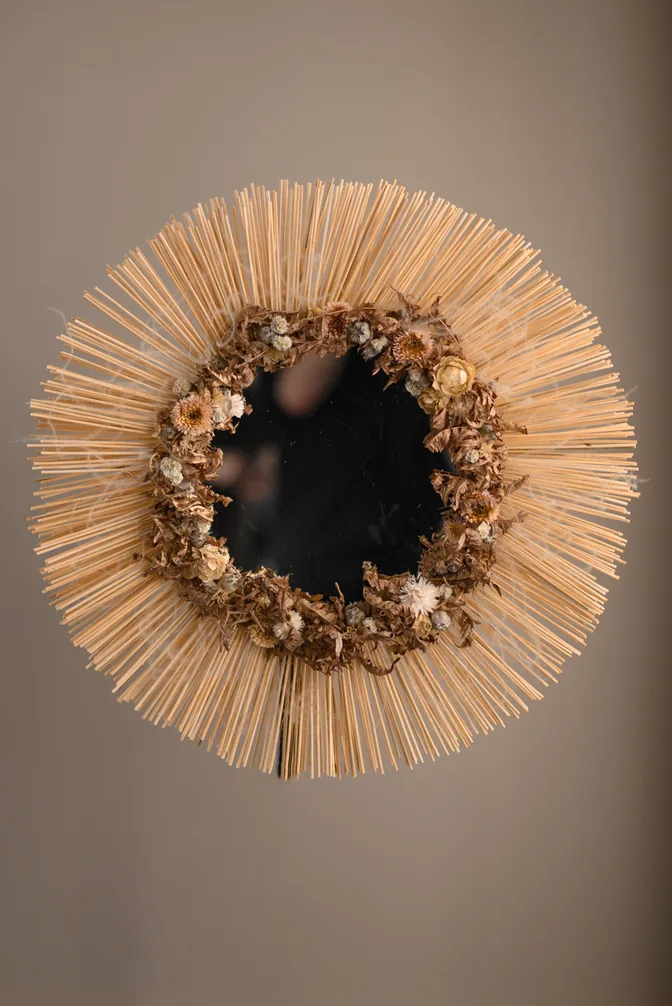
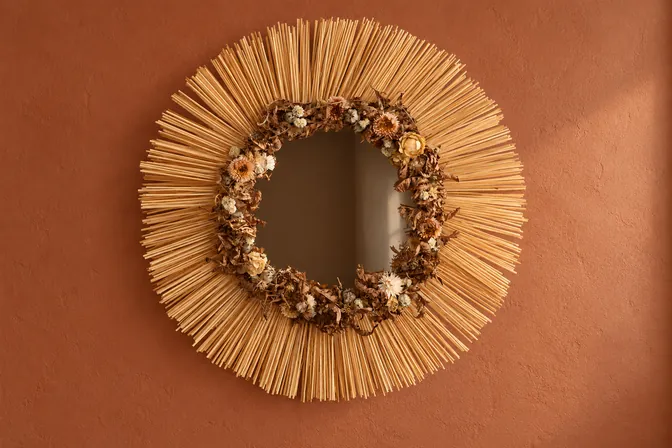
A mirror with radiating plant decoration
Radial wooden skewers establish a clear direction outward from the mirror. Fern and feather grass soften that pattern without turning it into a solid frame. Straight rays, fine plant lines and the smooth reflecting center each contribute a different texture. The outside of the decoration extends beyond the glass, so assess both edges when judging the shape.
Explore the step-by-step video for this project.
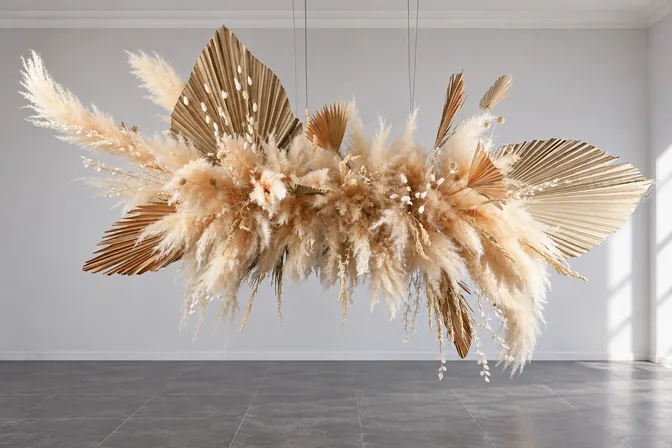
A large hanging arrangement
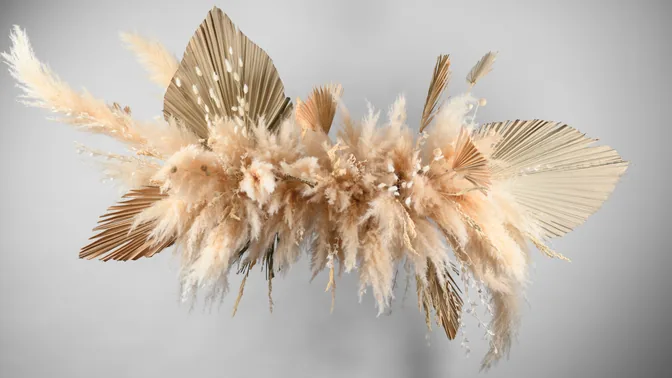
Plumes provide volume and palm leaves create broad surfaces. Small dried materials are grouped so they remain visible among the larger elements. Leaf direction depends on whether the hanging piece is viewed from below or from the side. The support mesh and suspension points have their own structural job; choose them separately from the plant pattern.
Let the support remain part of the design
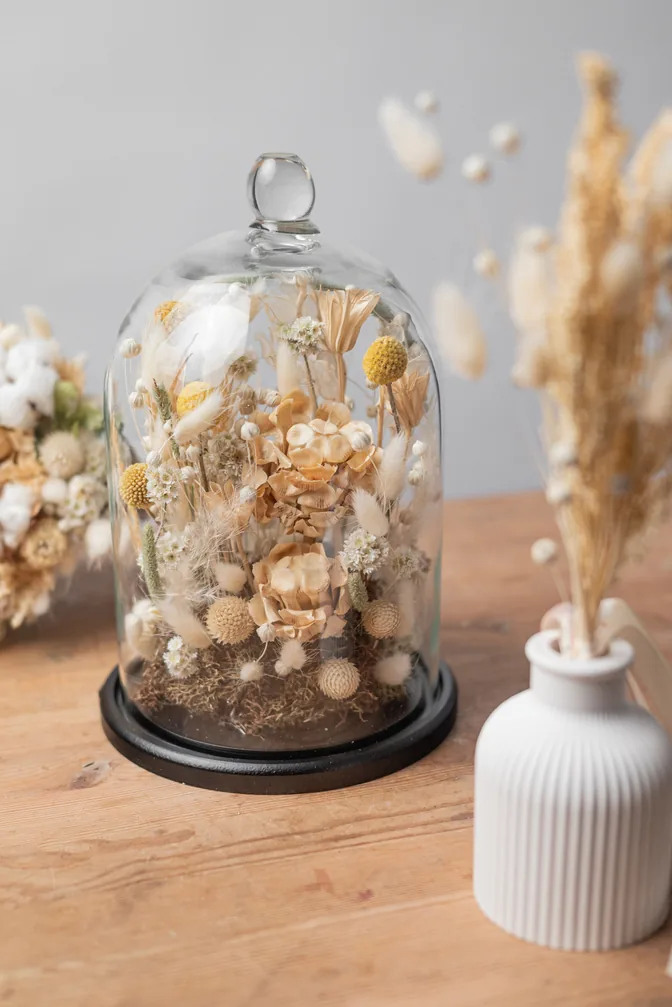
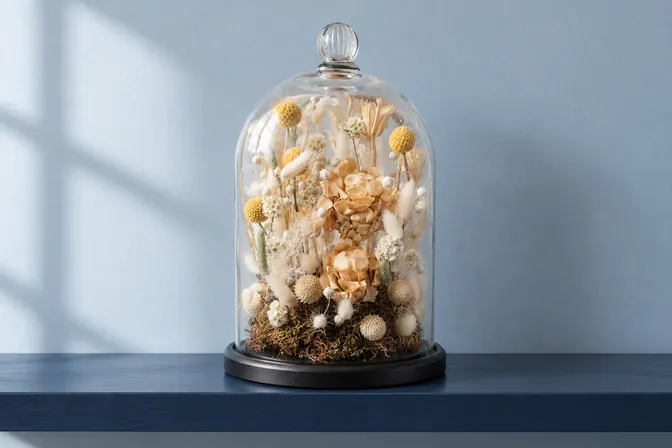
Flowers beneath a glass cloche
Moss covers the base, thin branches give height and craspedia heads add yellow accents under the glass dome. The glass keeps the intervals between materials visible; there is no need to pack the entire space. Check the height and side clearances before closing the dome. A graceful branch should not depend on being pressed against the glass.
Explore the step-by-step video for this project.
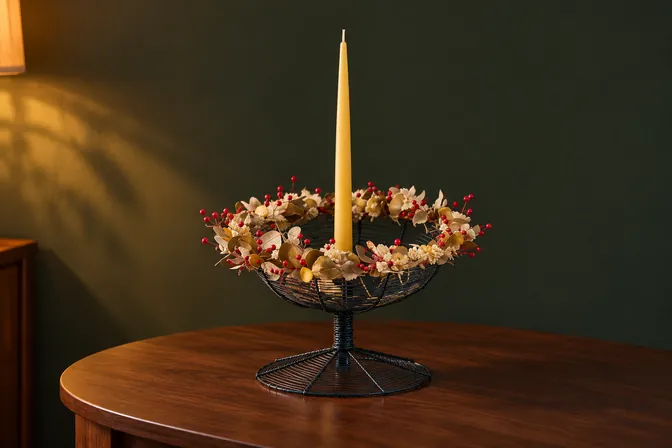
A woven wire bowl with dried flowers
The wire weaving is a texture in its own right: the base, stem, bowl and central holder remain part of the object. Gold-colored eucalyptus, craspedia and red flax complement the open structure instead of covering it completely. Making the support and placing the delicate plants are separate tasks. Keep a candle beside these materials unlit, or use flameless light.
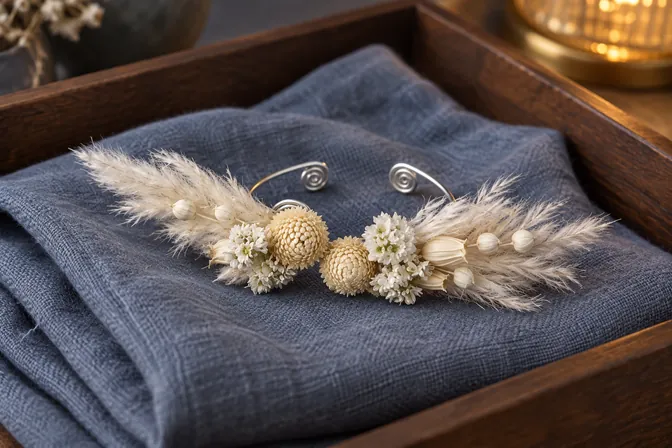
A bracelet on a wire base
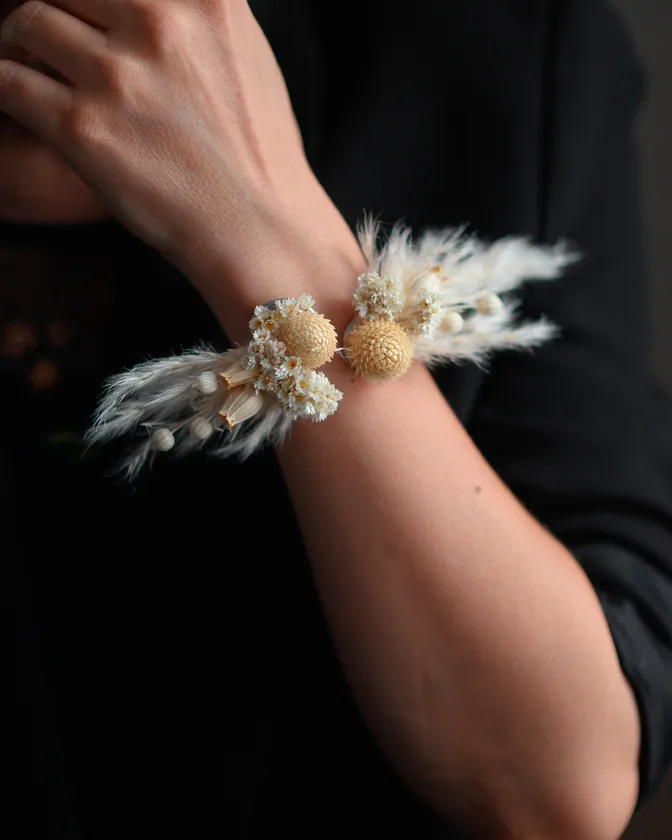
Two tightly coiled wire platforms support the bracelet decoration. Soft grasses form a fuzzy area, while small flax pods and larger dried heads provide contrast. The base is almost symmetrical, but the materials differ slightly from one side to the other. In a small accessory, excess glue, a rough cut or an oversized head is especially noticeable. Try the combination before fixing it permanently.
Build a small palette of your own
Start with the material you most want to show. Add a different shape or density: a crisp head beside a plume, small details around a large bloom, a calm surface near a loose branch. Remove materials that repeat a role and hide the one you meant to emphasize.
Do not choose a substitute by color alone. Compare stem length, brittleness, head size and the way it attaches in the project. Drying and storage are separate questions; a finished arrangement does not establish one preparation method for every plant. For the next decision, explore dried flower arrangements for a room and choose a form that gives your materials enough space.