Dried Flower Decor for Your Room
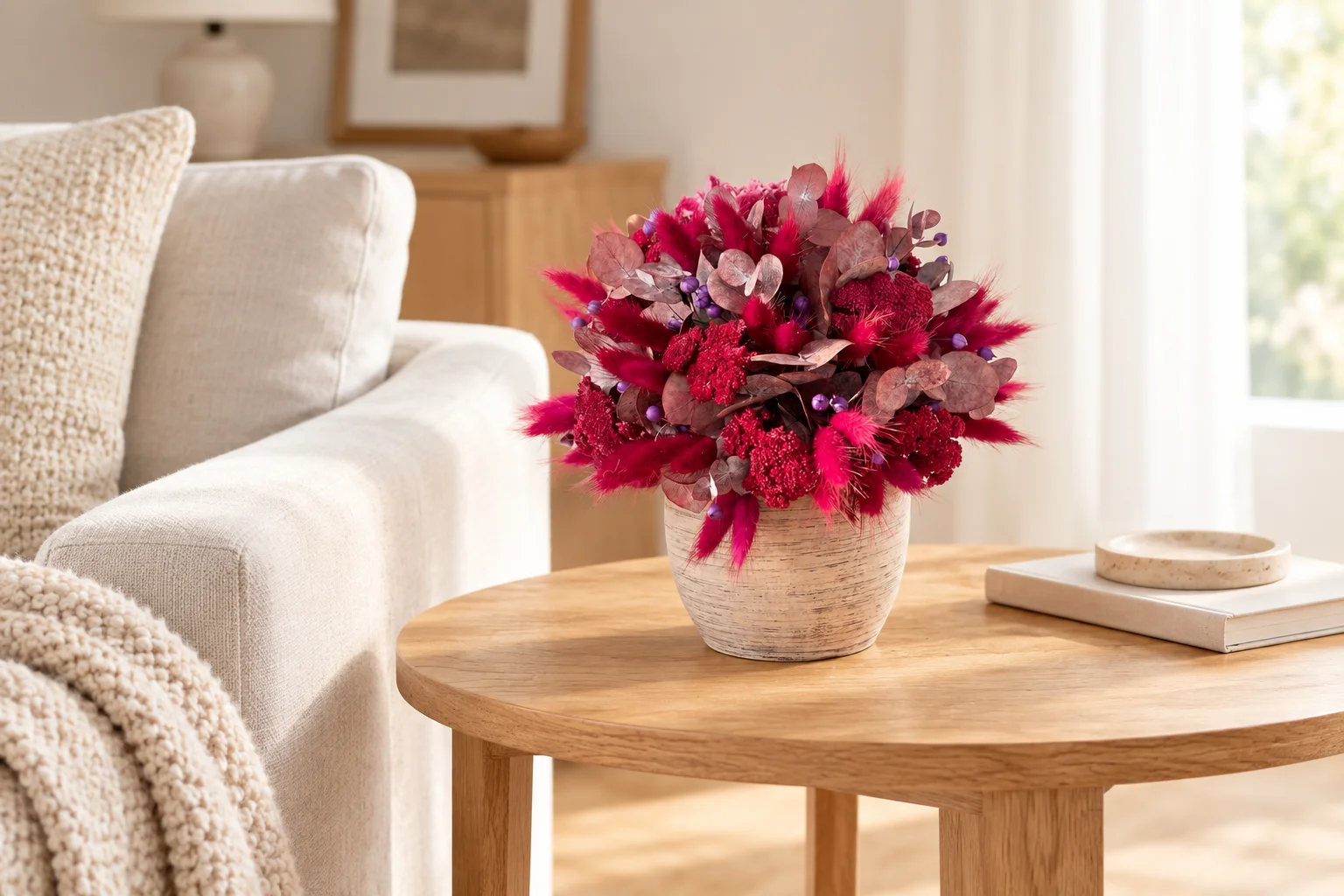
A room does not need flowers everywhere to feel considered. Start with one place: a table, a wall or a corner you notice every day. These eleven dried flower projects explore different shapes and scales, from an arrangement on the table to a personal detail in a celebration at home. Use them to find a direction that feels right for your space.
A round dried flower centrepiece for everyday tables
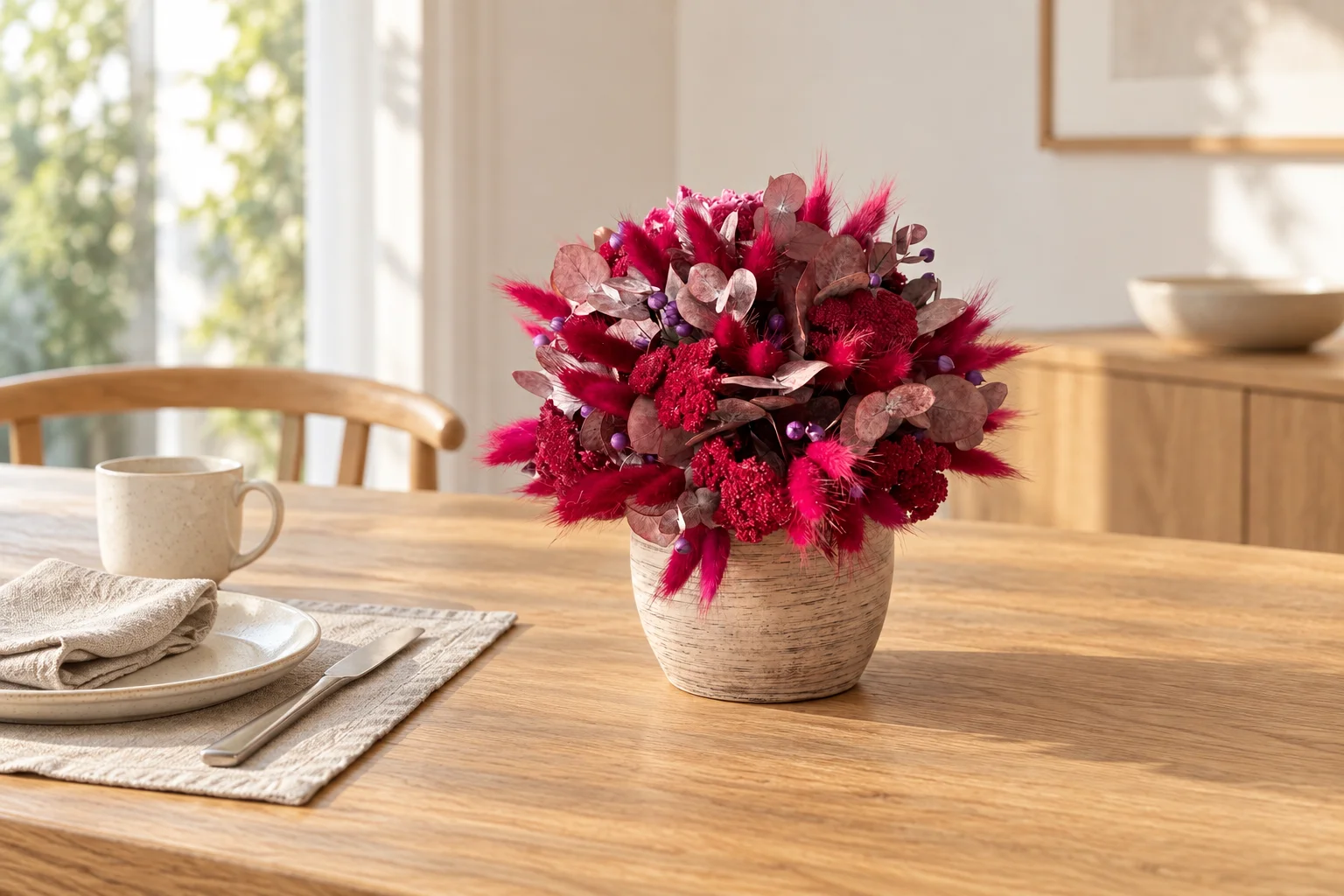
A round arrangement gives your table one clear centre. Imagine it beside a breakfast setting rather than surrounded by more decorations: the rounded outline becomes easier to appreciate when the surface around it is quiet. Before choosing a position, notice where plates, books and hands usually go. That everyday space matters as much as the flowers. This project is a useful starting point if you like a contained floral shape and want the table to remain part of daily life.
A spreading dried flower arrangement for a generous table
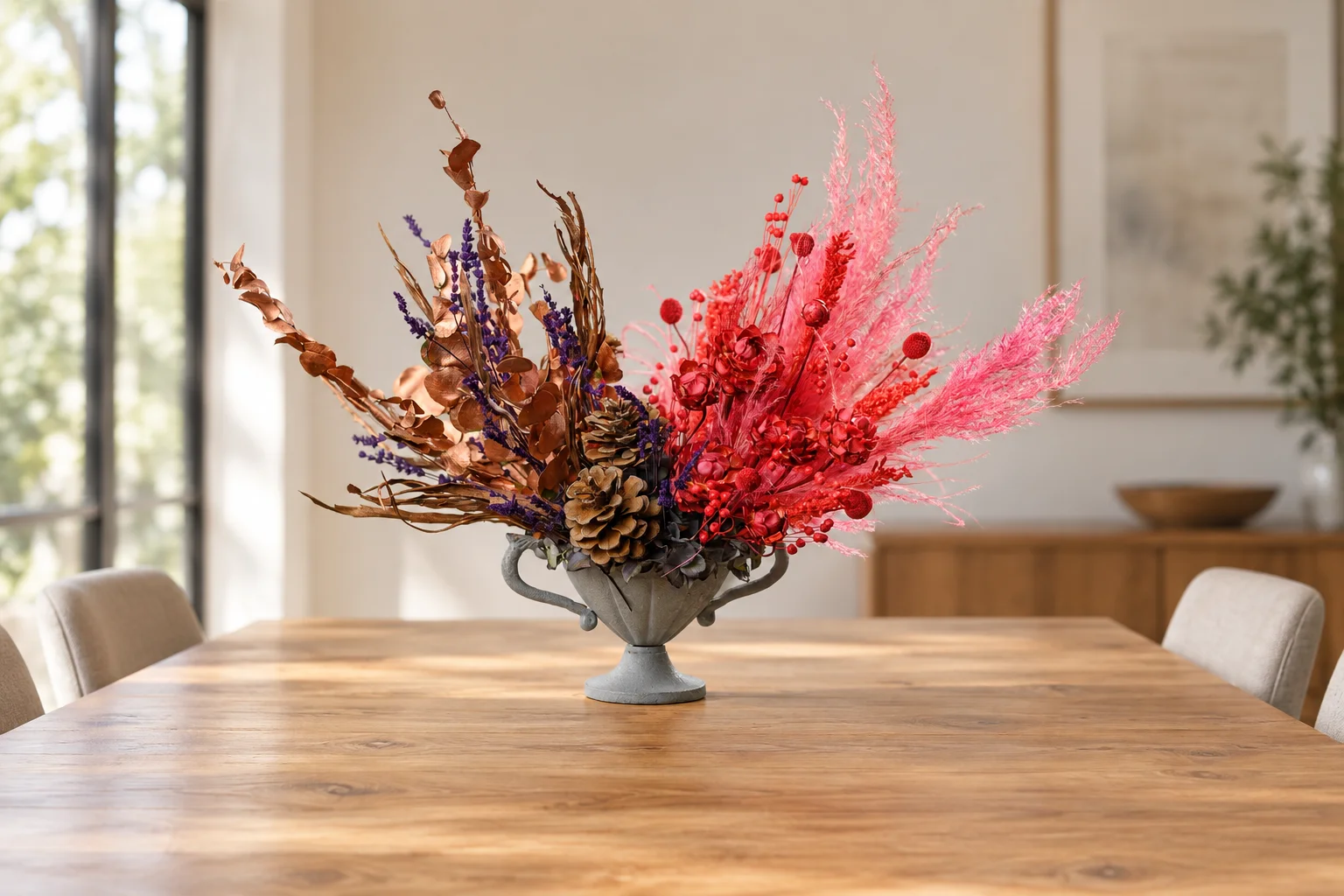
A longer table invites a different conversation between flowers and furniture. This spreading composition, originally made for a large table, draws the eye sideways instead of concentrating everything in one compact centre. Picture it as the main decorative gesture, with the surrounding surface left simple. Look at its widest branches before deciding where a similar arrangement might belong. Comparing this outline with the round project above helps you choose whether your room needs a compact pause or a broader sweep.
A dried flower wreath that gives a wall a focus
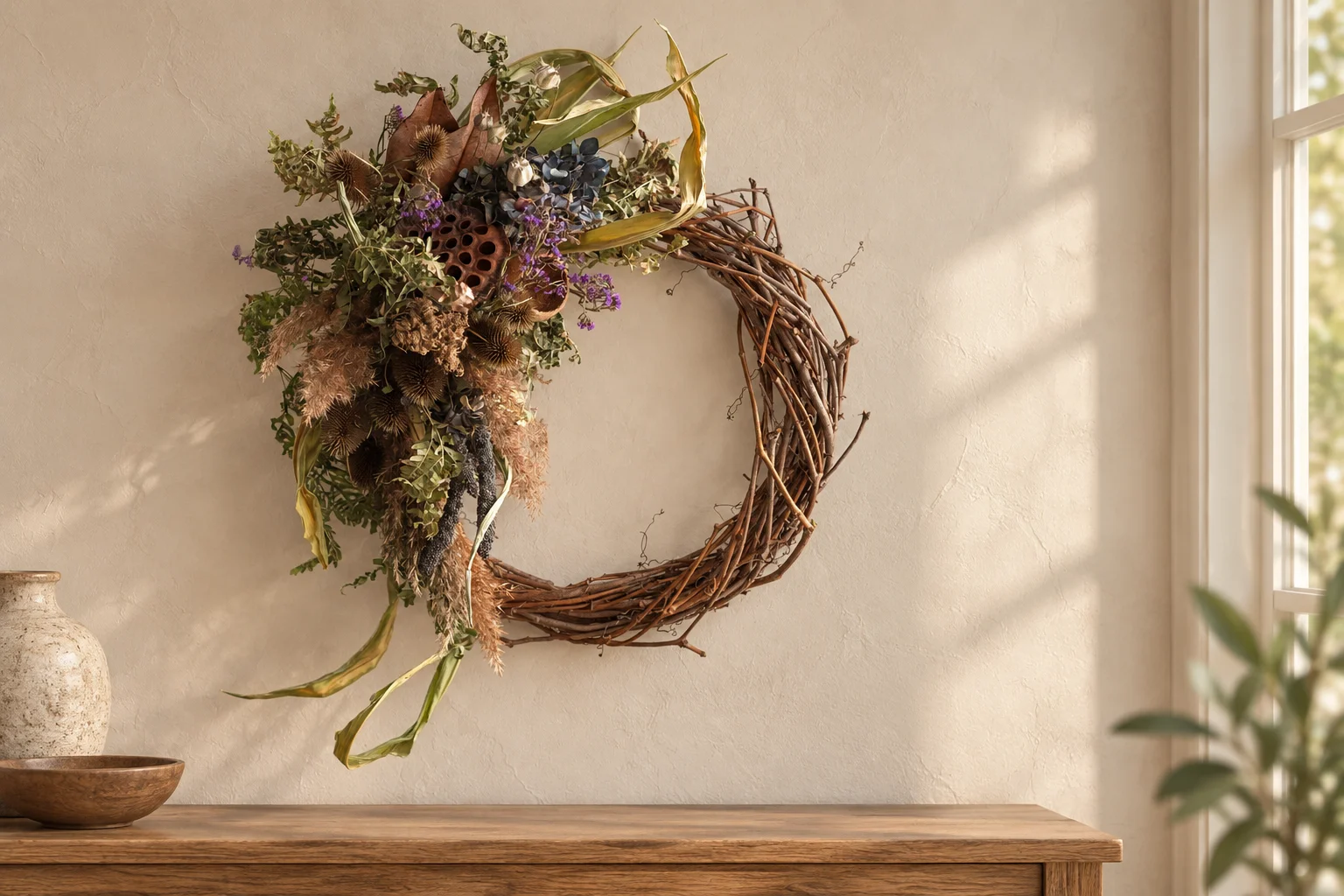
An empty patch of wall can feel unfinished even when the room has enough furniture. The grapevine ring gives this wreath a clear outline, while the flowers gathered to one side keep it from looking rigidly symmetrical. The visible vine and open centre are part of the design, not spaces that need filling. Imagine it above a small console or on a quiet wall you see from the doorway. Keeping nearby objects restrained lets the contrast between the branching ring and dense floral cluster do the work.
Dried flower mirror decor for an entrance
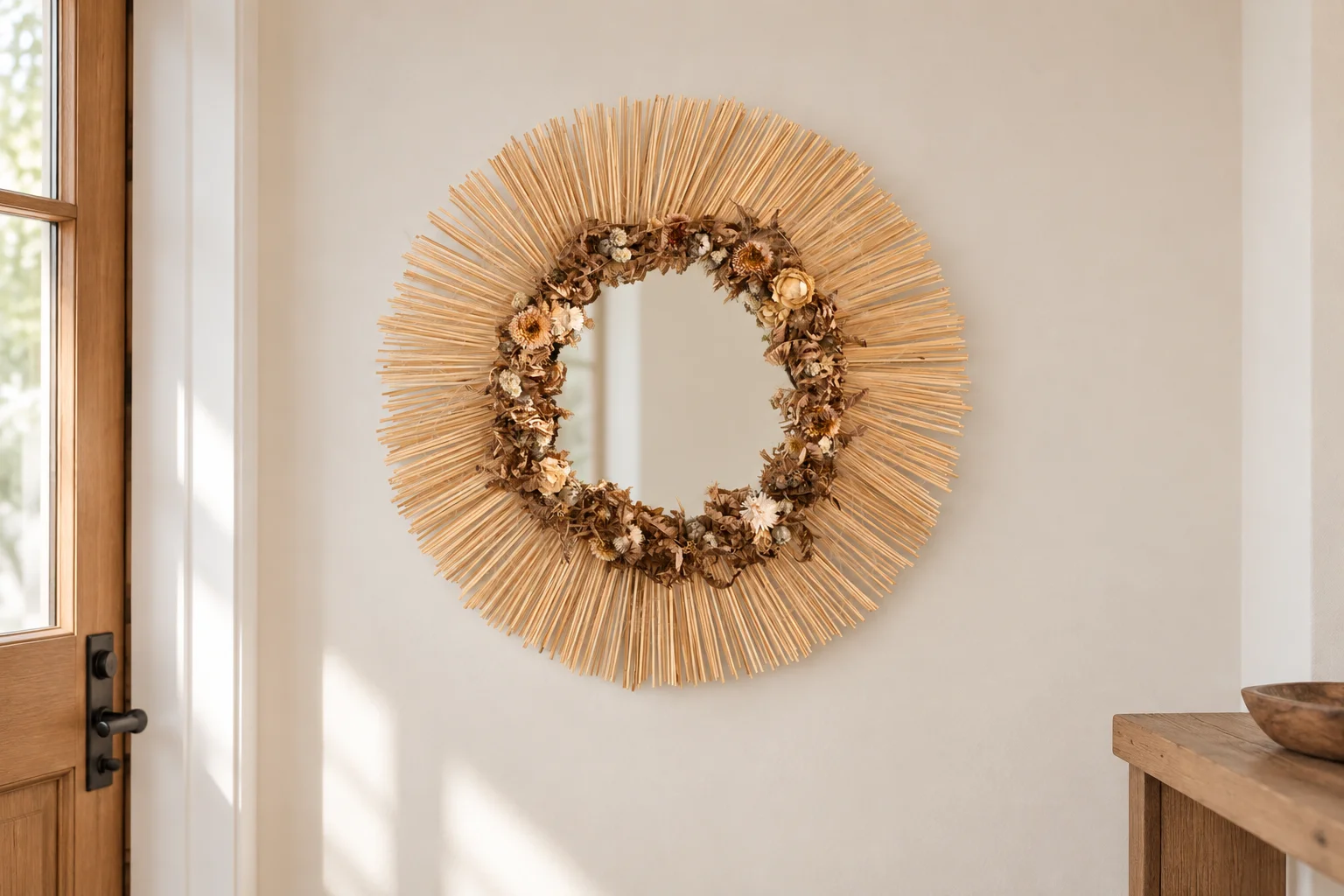
A mirror already attracts attention because it catches light and reflects the room. Flowers around its edge can turn that familiar object into a more deliberate feature. In this project the floral outline becomes part of the frame. Imagine an entrance with only a mirror and a small surface for everyday essentials: the arrangement supplies texture without needing a second decorative focal point. Think about what the mirror will reflect as well as the flowers themselves. A calm reflection can make the whole corner easier to read.
A dried flower cloche for a small display
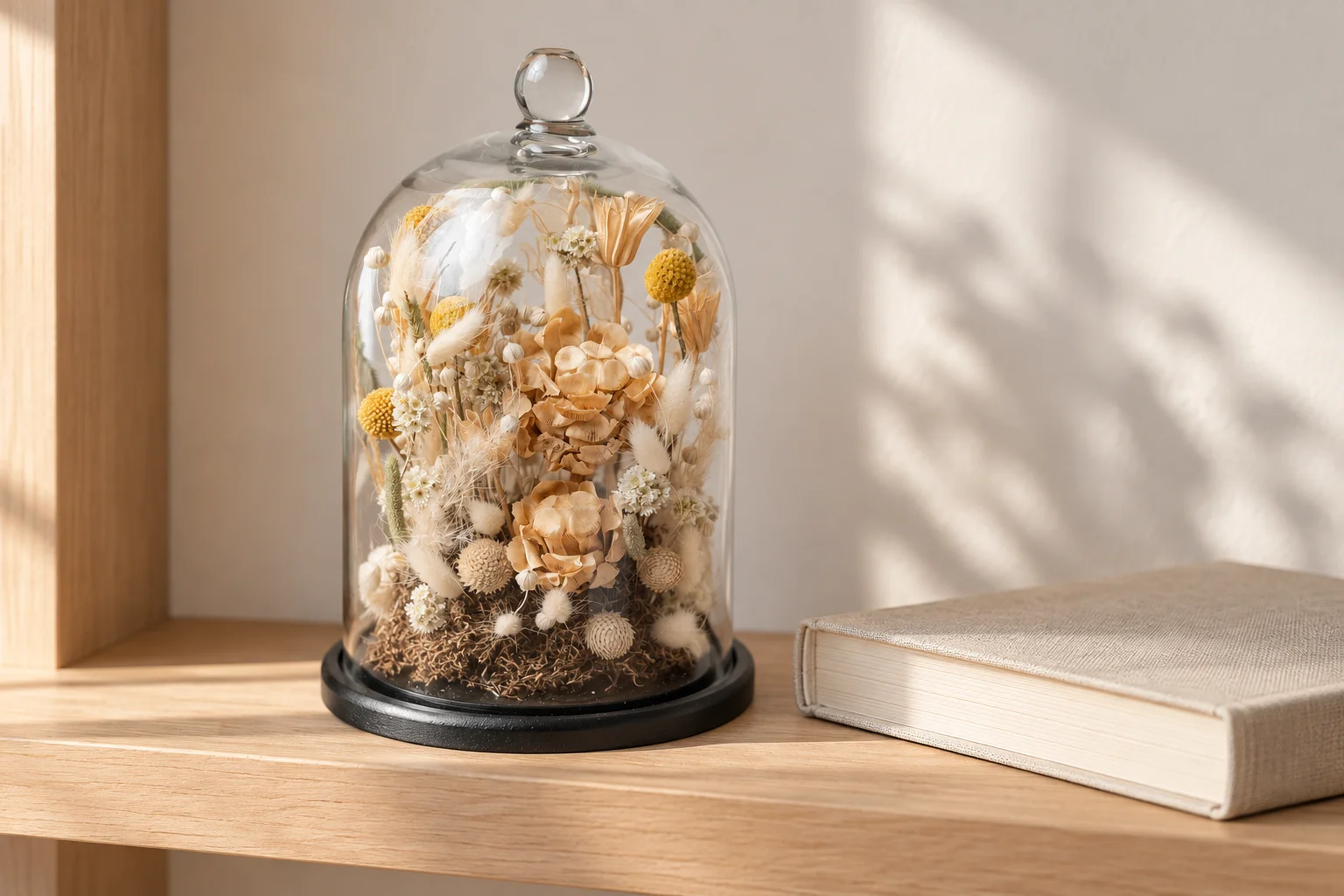
A glass cloche frames its contents differently from an open arrangement. The eye reads the dome first, then looks inside at the flowers. Imagine that small sequence on a shelf beside a book or on a side table with room around it. You can compare the enclosed shape with the open forms elsewhere in this collection to discover which feeling suits your room. Keep the setting simple enough to see the arrangement through the glass; the scene is about attention to one object, rather than filling every part of the shelf.
Look inside the cloche project
A round dried flower bouquet as a room’s colour reference
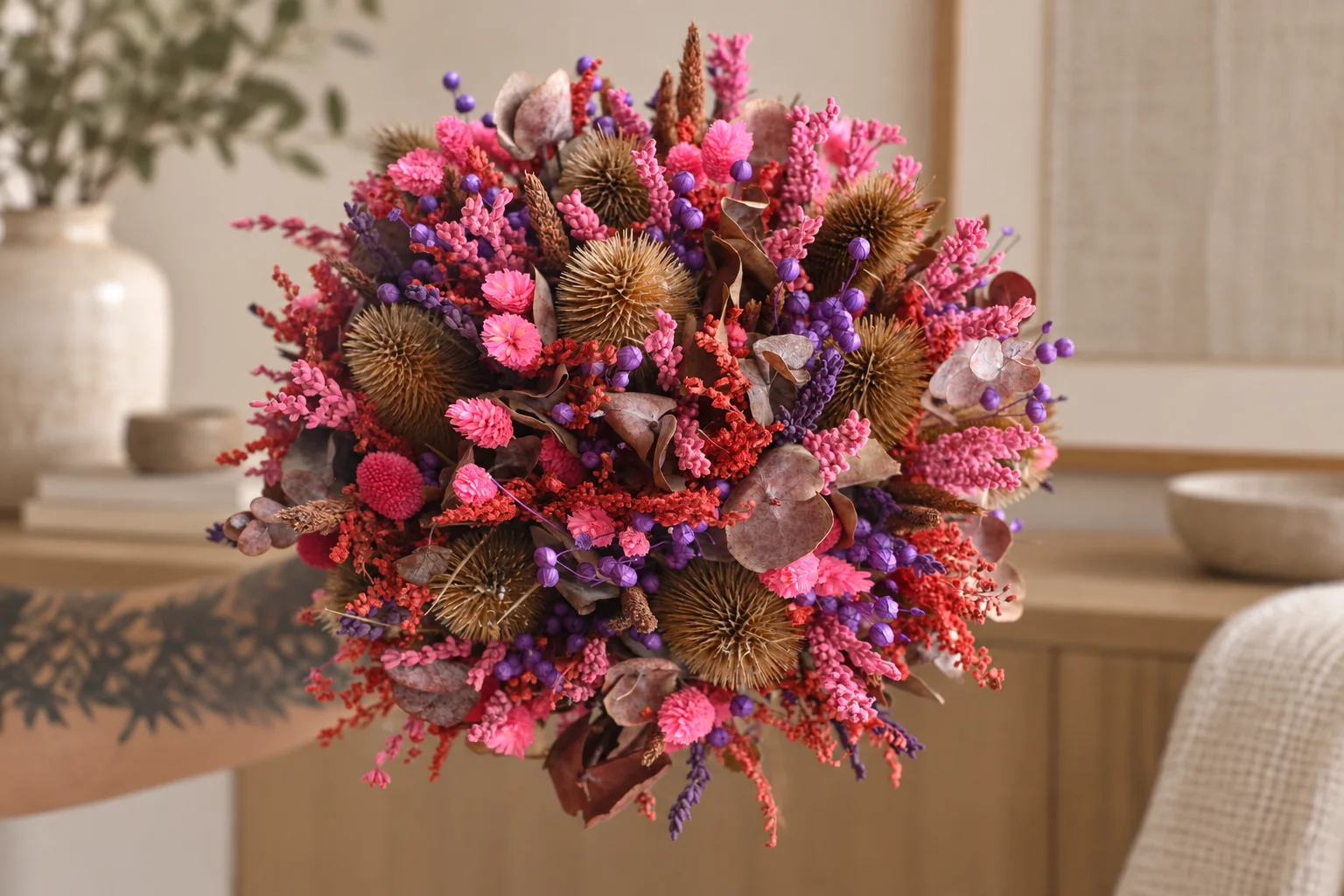
A bouquet can help you think about a room before you decide on its final decoration. Look at the rounded silhouette and the way the flower colours sit together. Imagine setting the bouquet down while comparing fabric or paint samples nearby: you are choosing a visual relationship, not trying to reproduce every colour in the room. This European-style round bouquet offers a different view of a rounded floral form from the tabletop arrangement. Follow whichever outline feels more natural beside the objects you already enjoy.
A floor arrangement for an open corner
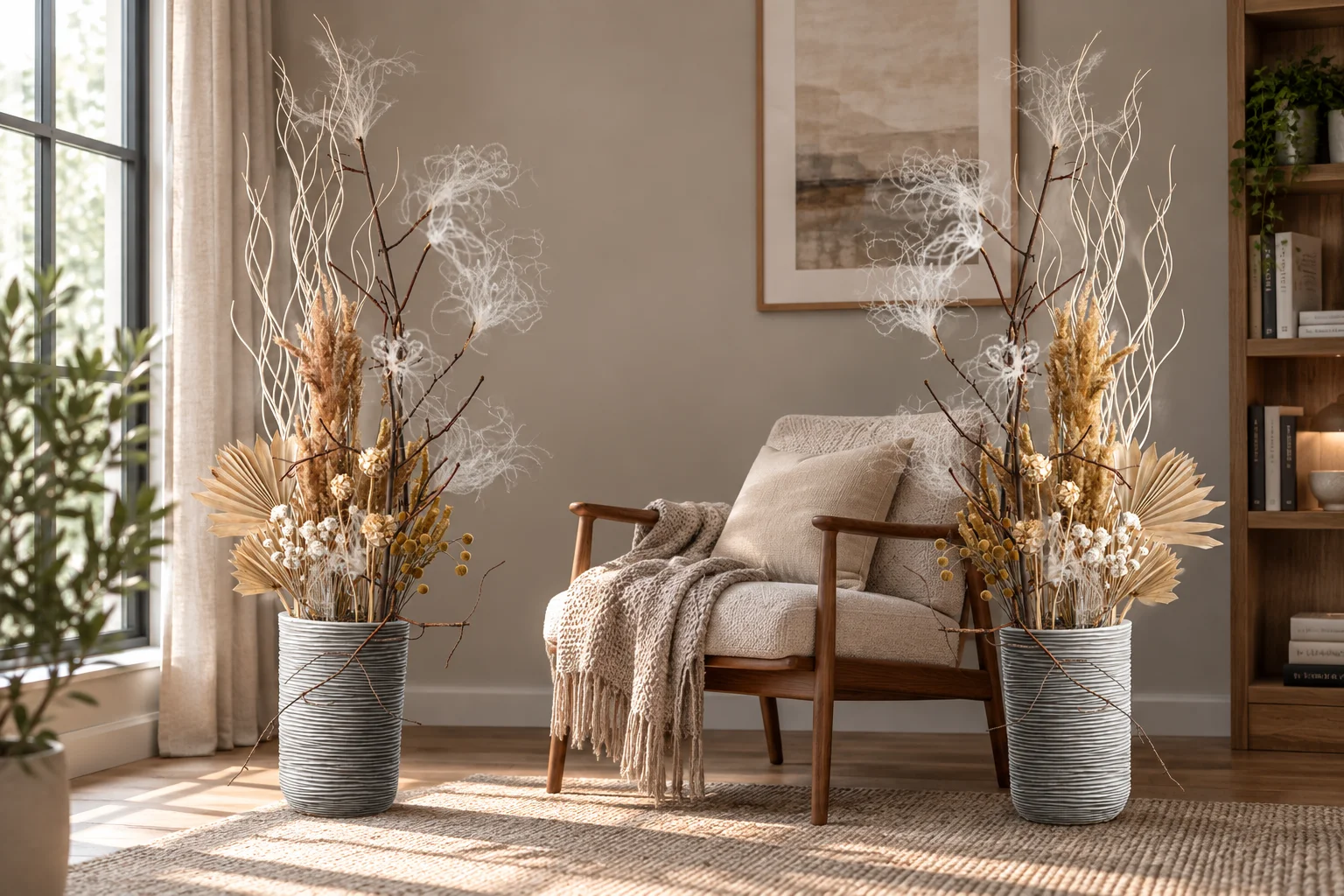
Some spaces need height more than another object on a shelf. A tall floor arrangement shifts attention upwards and changes how an empty corner meets the rest of the room. Imagine it beside a chair, with enough visual space to appreciate the outline from across the room. The point is not to fill every gap: it is to choose one vertical form that belongs in the composition. Compare its height and direction with nearby furniture before deciding whether a similar idea would feel settled in your own space.
A hanging dried flower installation above the room
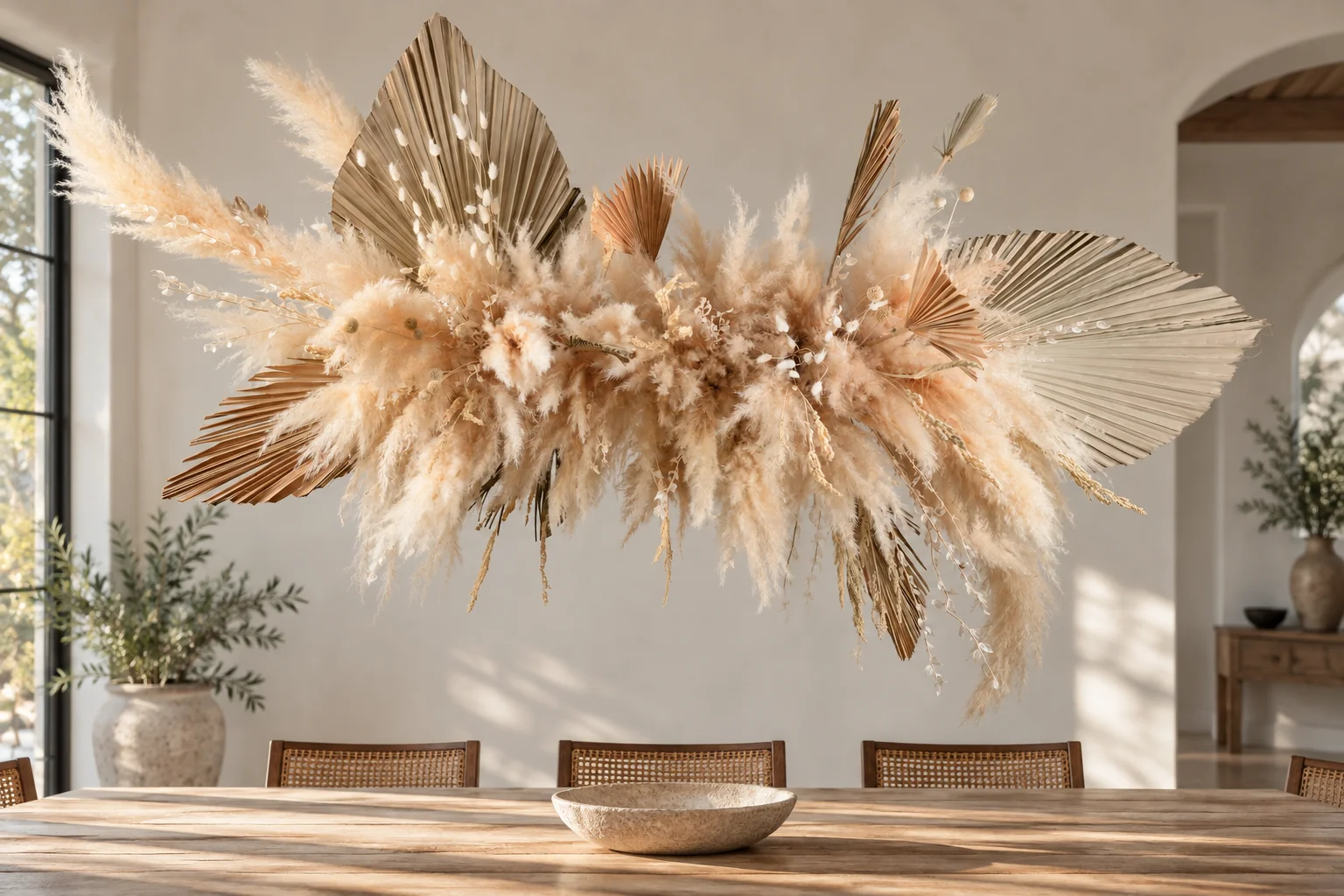
The largest gesture in this collection uses the space overhead. A hanging installation changes the view of a room without becoming another tabletop object. Think of the scene as inspiration for scale and atmosphere: how does the outline relate to a dining area below, and where does the eye travel? This is a different kind of project from a small arrangement. The photograph is a visual setting, not an installation specification; the project page is the place to explore the work itself.
A bridal bouquet in the story of a home
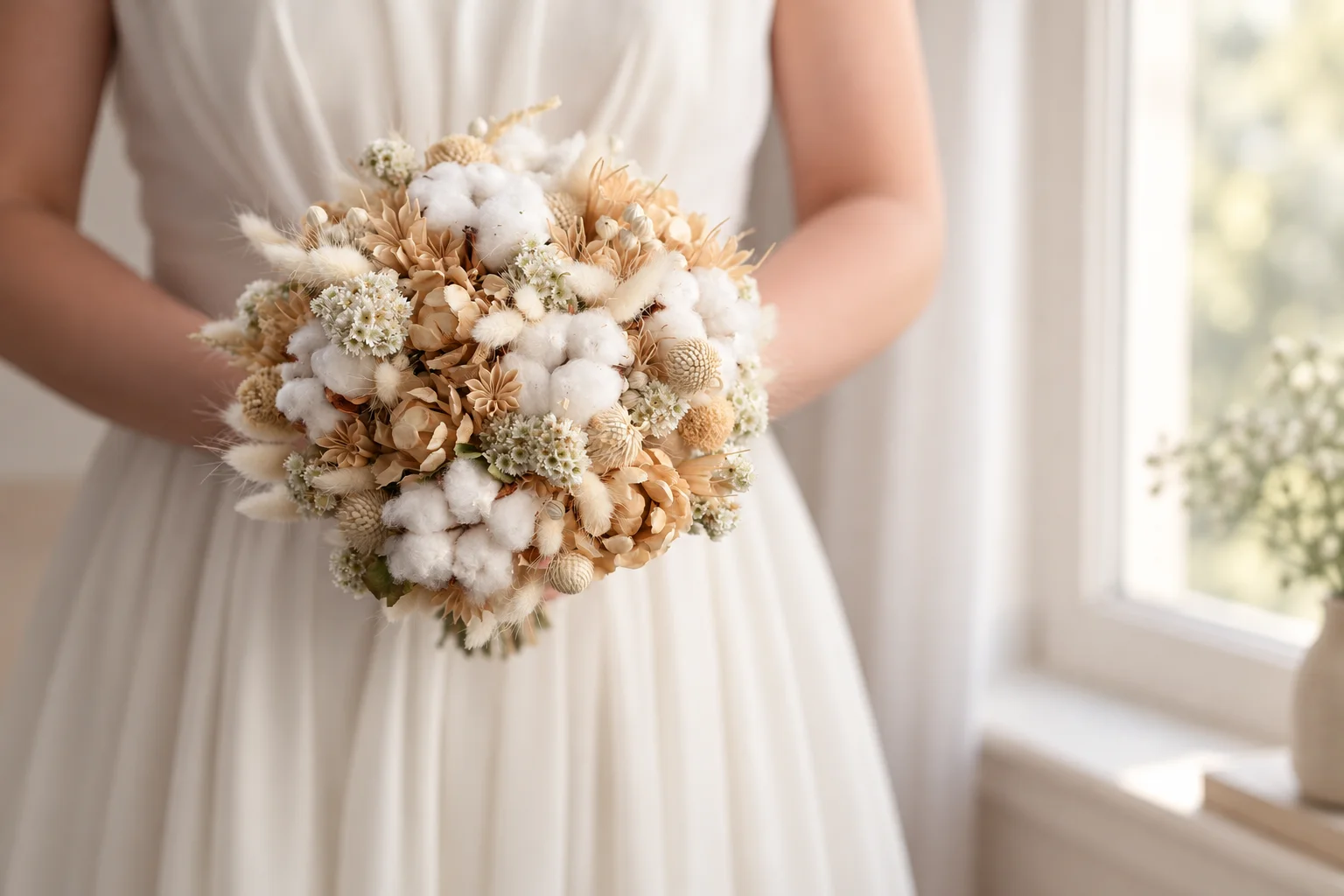
A room can reflect occasions as well as everyday routines. Imagine a wedding morning at home, with a bridal bouquet held near a favourite window. The flowers belong to the celebration, while the familiar setting gives the photograph a personal connection. This bouquet is a wedding project; its place here is as an example of how floral colour and shape can become part of the memories associated with a room. Let it suggest a mood for your own space without assuming that a bridal bouquet must become permanent decor.
A dried flower boutonniere as a personal detail
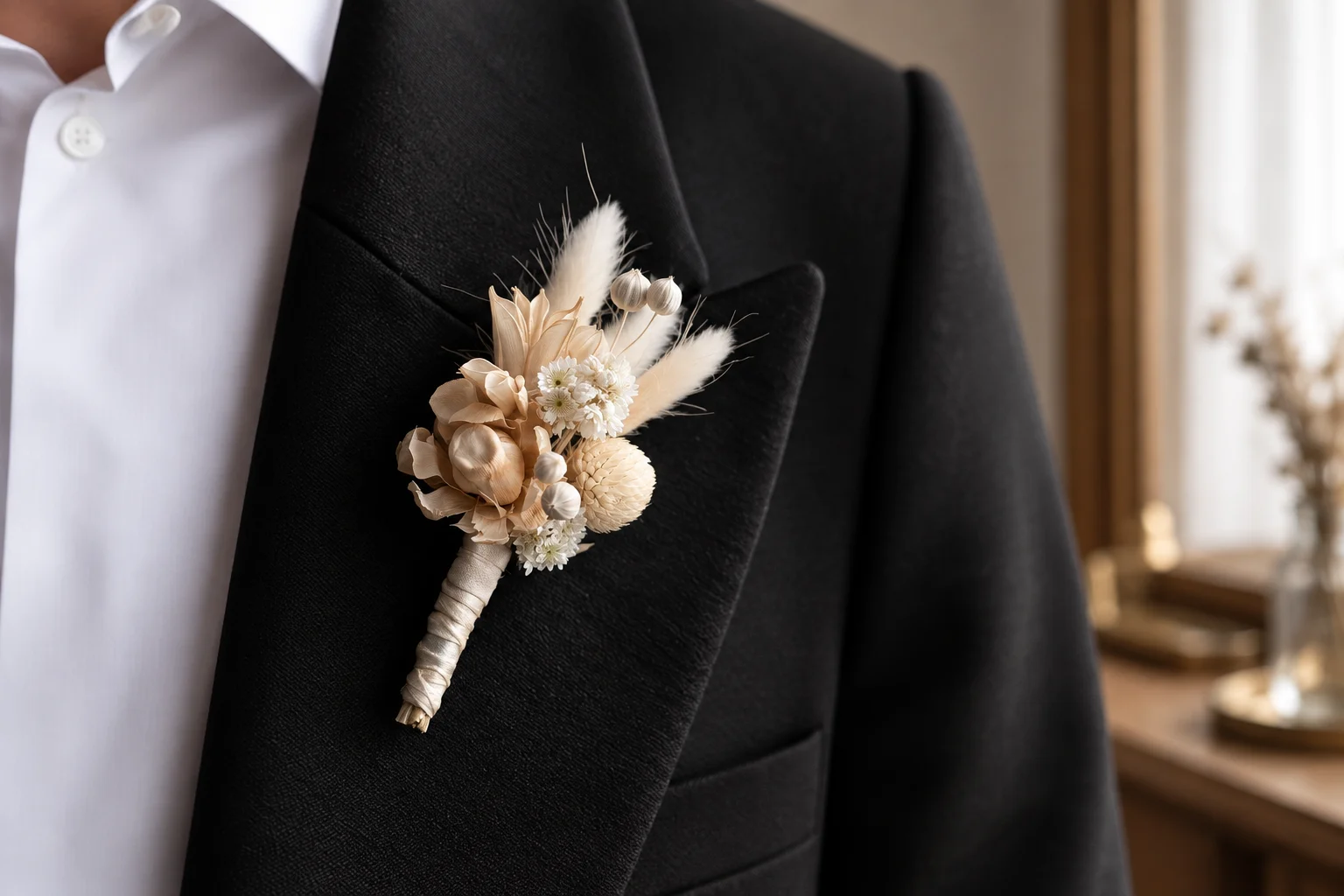
Small floral details can tell a room’s story without being interior objects themselves. Picture a jacket waiting on a wedding morning, its ribbon-finished boutonniere the one carefully chosen accent. The contrast between fabric and dried flowers makes the miniature composition easy to notice. If you are gathering ideas for a personal corner of your home, a photograph of such a detail can be a starting point for colour or texture. The project remains a wearable wedding accessory, shown at its own small scale.
A dried flower bracelet in a getting-ready corner
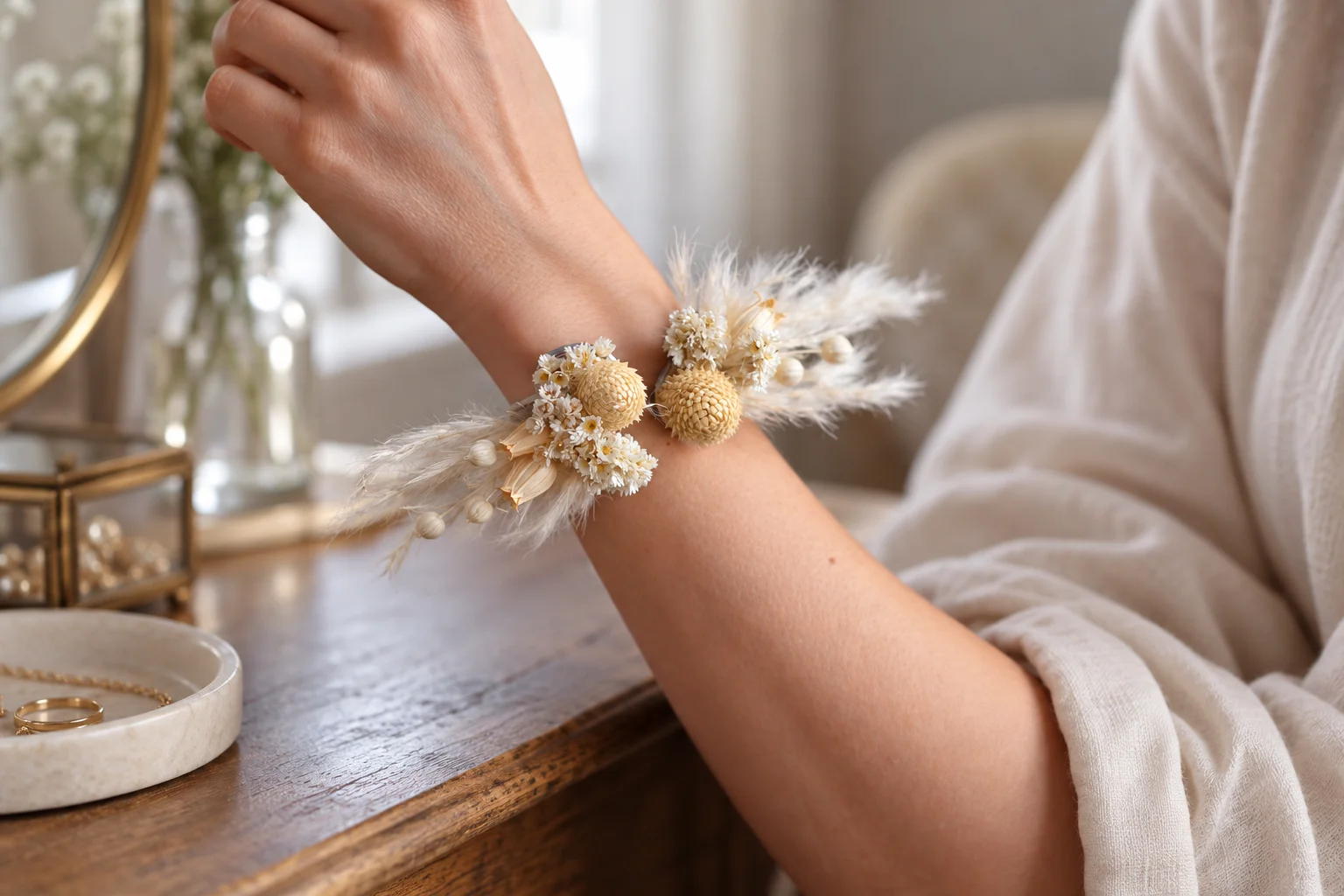
A floral bracelet brings the composition right onto the wrist. Imagine that detail in a quiet getting-ready scene, with the surrounding room kept in the background. Its place in this collection is personal rather than architectural: it shows how the same interest in floral shape can move from a room to something worn for an occasion. Look at how the accessory follows the wrist, then compare that close, intimate scale with the larger forms above. A home’s visual story can include both without needing every object on display at once.